Author: News Staff

  • Rancho Mirage’s Tolerance Education Center Hosts a Compelling Presentation

    Rancho Mirage’s Tolerance Education Center Hosts a Compelling Presentation

    Cambodia, a country located on the mainland of Southeast Asia, is a land of plains and great rivers. It is mainly a rural country.  In the capital city of Phnom Penh, the influences of many Asian cultures, alongside those of France and the United States, can be seen.   

    The vast majority of its population is comprised of Khmer (Cambodians).  Minorities include Chinese, Vietnamese, Muslim Cham-Malays, Laotians, and more.   

    On April 17, 1975, the Khmer Rouge (Red Cambodia), led by Pol Pot, seized control of the country, intending to turn the place into a communist agrarian utopia, a classless society. Cities were emptied, and millions of people were evacuated to labor camps.  Teachers, doctors, attorneys, and other educated people, as well as monks and the rich, were considered a threat.  

    It is estimated that between 1.7 and 2 million Cambodians died during the Khmer Rouge four year reign (21 to 24% of the country’s population).

    An invasion from neighboring Vietnam, on January 7, 1979, toppled the Khmer Rouge regime.

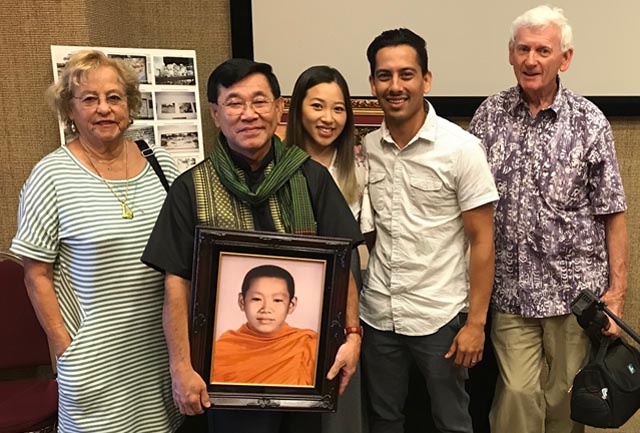
    On Wednesday, June 26, the Tolerance Education Center hosted William Eir, who shared his compelling Cambodian survival story.  After losing both his parents, Eir was placed in a Buddhist Temple and trained in becoming a monk.  He was 9 years old when the Khmer Rouge came into power.  Eir lost his brother and many other relatives.  He endured mental torture while being placed in solitary confinement for long periods.

    In 1983 Eir migrated to the United States.  He studied nursing.  On July 4th, 1988, his journey to U.S. citizenship became a dream come true.  Today Eir resides in Palm Springs. 

  • DESERT ARC HONORED

    DESERT ARC HONORED

    By Madeline Zuckerman

    Palm Desert, CA.  – Desert Arc, known for its outstanding work of enhancing the lives and creating opportunities for people with developmental and intellectual disabilities, was one of five recipients of the Riverside County Department of Waste Resources’ Sustainability Award on April 30th.  This annual Sustainability Award was established to distinguish the significant contributions of an organization’s efforts towards sustainability.  It is centered on the concept of recognizing innovative business practices that exemplify the 4 R’s: Reduce, Reuse, Recycle, and Rethink.  Every year the Board of Supervisors submits nominations from each of its five districts. 

                “We are celebrating our 60th Anniversary this year, and we are honored to receive this prestigious Sustainability Award,” stated Richard Balocco, President/CEO of Desert Arc.  “We are grateful to Supervisor Perez for nominating our Recycling Division, in recognition of our leadership role in the field of environmental stewardship program and serving people with disabilities,” Balocco continued.

    Back Row: Hans Kernkamp (Riverside County Dept. of Water Resources General Manager-Chief Engineer), Supervisor Kevin Jeffries, (First District), Supervisor Karen Spiegel (Second District), Supervisor Chuck Washington (Third District), Supervisor V. Manuel Perez (Fourth District). Second Row: Bonnie Woodrome, (EVMWD), and Clara Miramontes (City of Perris). First Row: Leah Di Bernardo (EAT Marktplace), Joanne Di Bernardo (EAT Marketplace), Christina Henry (EVMWD), Haley Munson (EVMWD), Isabel Carlos (City of Perris), Sabrina Chavez (City of Perris), Angelique Ontiveros (Desert Arc), and Frank Gonzales (Amazon Paint).

                Desert Arc’s Recycling Division, one of the five district winners selected for this prestigious Sustainability Award, was nominated by Riverside County Fourth District Supervisor V. Manuel Perez. Other distinguished honorees included Elsinore Valley Municipal Water District, Amazon Paint, Eat Marketplace in Old Town Temecula, and the City of Perris for its Live Well Perris Campaign and Grow Perris initiative.

                “Having toured Desert Arc’s Recycling Division, I have seen the hard work it does to recycle cardboard and electronics and keep these products from going to waste,” stated Riverside County Fourth District Supervisor V. Manuel Perez.  “The Recycling Center is driving environmental progress in the Coachella Valley and in our country.  For its leadership in sustainability, Desert Arc merits this recognition,” Perez continued.

                Commented Hans Kernkamp, General Manager-Chief Engineer of the Riverside County Department of Waste Resources, “these businesses and organizations are demonstrating a long-term commitment to creating healthier communities through sustainability and environmentally sound business practices.” 

                The end result of what Desert Arc achieves is clear: paper, cardboard, and electronics are being recycled instead of ending up in the landfill.  Whether it is picking up a big load of cardboard and inserting it into a baler, or diligently disassembling an old computer to uncover electrical components, there is always an opportunity to recycle.  Desert Arc fills a tractor trailer a week of both cardboard and shredded paper.

                “Desert Arc’s Recycling Division, headquartered in Indio, is thrilled to receive the Sustainability Award,” stated Angelique Ontiveros, Director of Business Services & Facilities for Desert Arc. “Our team works very hard each and every day to help make a difference in reducing waste and recycling resources in our local community.  It means a lot to all of us to be recognized among other innovative green business solutions in Riverside County,” Ontiveros continued.

  • Lee Iacocca, ‘father of Ford Mustang’ & savior of Chrysler, dies aged 94

    Lee Iacocca, ‘father of Ford Mustang’ & savior of Chrysler, dies aged 94

    Titan of the US automotive industry Lico ‘Lee’ Iacocca, who once led Ford and later Chrysler, died of natural causes Tuesday aged 94. He is survived by two daughters and eight grandchildren.

    Iacocca was widely credited with saving Chrysler from near-bankruptcy in the 1980s and was instrumental in the creation of both the iconic Ford Mustang and the Chrysler minivan.

    Born in Pennsylvania on October 15, 1924 to Italian immigrant parents, Iacocca would go on to become one of the most successful business tycoons in the US automotive industry. 

    Iacocca started at Ford Motor Company in 1946 and was one of the team who spearheaded development of the world-famous Ford Mustang. Though he was made president of Ford in 1970, he was fired just eight years later by Henry Ford Jr. in 1978, which he compared to “what it feels like to get kicked off Mt. Everest” in his autobiography.

    He then moved to Chrysler in 1978 and would become its CEO a year later, a role in which he was largely credited with saving the ailing company from imminent bankruptcy by securing $1.5 billion in bank loans from the US government in order to weather impending back-to-back recessions throughout the 1980s. 

    During Iacocca’s tenure as CEO, Chrysler would produce more fuel-efficient cars and more competitive products, staving off stiff competition from Asian and European imports and securing a sizeable portion of the US market share for a time. 

    He also starred in several Chrysler TV commercials in which he declared “if you can find a better car, buy it.”

    “He was one of a kind and will be dearly missed,” said Bill Ford, executive chairman of Ford Motor Company, as cited by Bloomberg. 

  • “GRAND OPENING” PALM DESERT JUNE 8th & 9th

    “GRAND OPENING” PALM DESERT JUNE 8th & 9th

    Clinical proven to relieve pain

    The creation of the first Gravity Defyer shoe was the culmination of years of scientific research and one man’s relentless passion for solving his nephew’s debilitating health problem.

    It began when Alexander Elnekaveh’s 14-year-old nephew was diagnosed with a cancerous growth in his heel. Even after successful heel replacement surgery, the youngster was given little chance of ever walking free from pain. As an inventor, mechanical engineer, and former army medic, Alexander was determined to find hope for his young nephew that would allow him to live an active life without being held back by debilitating pain.

    He put years into solving his nephew’s problem: researching new medications, treatments, and prosthetics. It was on a flight home from another failed meeting with pain management specialists that the idea for Gravity Defyer shoes was born. As Alexander felt the wheels of the 747 touch the ground, he thought to himself “If a massive aircraft can land smoothly, absorbing over 100 tons on impact without so much as spilling his coffee, why couldn’t a shoe do the same thing?”

    Alexander assembled an all-star team of renowned mechanical engineers, podiatrists, industrial designers, and applied materials engineers to form the Impact Research Technology Group. The results of which became the VersoShock sole and an ever-expanding line of Gravity Defyer footwear designed to bring the same powerful shock absorbing technology to every lifestyle and occasion.

    Impact Research Technology Group created the first Gravity Defyer shoe in 2004. The results and comfort were incredible, and Alexander recognized that these shoes could have amazing benefits for everyone. The company Gravity Defyer was created in 2008 as the sole manufacturer and distributor of shoes featuring the patented sole technology that later became dubbed the VersoShock sole. Over ten years of design and research has gone into refining our shock, absorbing shoe technology, and the efforts continue as we improve upon the original design and incorporate new materials and technology. Today we offer an assortment of sole types and styles tuned for almost any activity and lifestyle.

    Grand Opening this weekend June 8 & 9!
    Gravity Defyer 

    Palm Desert, 40101 Monterey Ave. Suite F-1
    Rancho Mirage, CA, California 92270
    Phone: (760) 565-54256

  • Ron Howard Discusses His Documentary on the Iconic Tenor Luciano Pavarotti

    Ron Howard Discusses His Documentary on the Iconic Tenor Luciano Pavarotti

    One-on-One With… Lady Beverly Cohn

    Ron Howard certainly falls into the category of a national treasure beginning with his role as America’s favorite kid, Opie, on “The Andy Griffith Show.”  Since that time, that little kid from Duncan, Oklahoma, co-starred in a variety of episodic television shows as well as directing Emmy-award winning programs.  He made his feature film directing debut with “Grand Auto Theft” subsequentlyworking with some of the most famous Hollywood actors, including Robert De Niro, Tom Cruise, Nicole Kidman, Kurt Russell, Mel Gibson, Gary Sinise, Tom Hanks, Kevin Bacon, Ed Harris, and Bill Paxton.  He has directed some of the film industry’s most memorable films including, “Cocoon,” “A Beautiful Mind,” “Splash,” “Parenthood,” “Cinderella Man,” “Frost/Nixon,” and “Apollo 13,” which garnered the Best Director Oscar.  

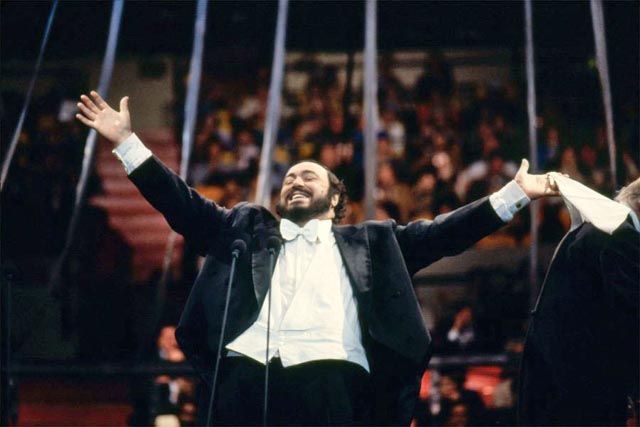
    Your reporter sat down with this brilliant director for an exclusive interview to discuss his latest film, “Pavarotti,” a documentary on the life, times, and struggles of one of the world’s most famous tenors. A CBS Films Polygram Entertainment Brian Grazer presentation, the film is an Imagine Entertainment and White Horse Pictures production and is scheduled to open in select cities on June 7.

    The following has been edited for content and continuity for print purposes.  

    You’ve made two successful documentaries:  “Made in America” and

     “The Beatles: Eight Days a Week – The Touring Years.”  Why a documentary on Pavarotti?

    Ron:   I was drawn to his personal and professional journey, which I thought was inspiring and very dramatic and a great human-interest story. He had missteps and foibles, but at the end of the day, I felt there was an interesting paradox with this very common, earthy guy performing at that high level for so many years.  The film is a blend of his life and what I could reveal about opera, what it takes to sing opera, and what opera can mean on an emotional level. I could offer audiences something a little surprising. That’s what drew me to make the film.    

    When you were doing your research and interviewing people, did you discover something that surprised you?

    Ron:  It was interesting to understand the way he navigated in the world.  So on the one hand, he was not innocent, but he wanted people to like him, and he wanted to make people feel comfortable.  At the same time, he was a shrewd businessman, and he cared about the deals.  I was surprised at the way his career sort of flattened out.  He went into a period of a kind of a malaise wherein he canceled appearances and was just down in general in the wake of some romances that didn’t work out.  His marriage was over, but he didn’t feel he could get a divorce.  Being Catholic and Italian made a divorce highly problematic for him and his family.   

    Was it easy to get cooperation from his family?

    Ron:  I didn’t interview his first wife Adua Veronibecause I don’t speak Italian and I was directing “Solo – A Star Wars Story” at that time.  I think the family was incredibly courageous.  They gave us all a gift – not by just offering insight into Luciano – all his foibles and all his disappointments – but also by giving us an object lesson in forgiveness.  I didn’t expect that.  None of us expected that to come out of those interviews and it wasn’t just Adua,it was also the daughters.  

    Did someone in Pavarotti’s life positively impact him?

    Ron:  I was surprised that Princess Diana, who I had an opportunity to meet a couple of times over the years and talked to her, had a profound effect on him.  Her dedication to philanthropy seemed to reinvigorate him in a way, and he took that on himself.  That was something that came out of the interviews. 

    What is it about documentaries that you find particularly exciting?

    Ron:  I always enjoyed them, and they satisfy my curiosity. They’re related to a lot of the narrative stories that I’ve done – the ones that are either based on real events or they’re fiction and meant to depict the world like the movie “The Paper.”  I wanted the journalism to feel realistic even though it was a fictional story.  There’s a lot of research involved.  I always found that fascinating, and as I’ve done that, it’s made me more and more curious about what it would be like to make a documentary and take on that responsibility.  In the three films I’ve done, I’ve had fantastic collaborators who were helping me understand that discipline.  I find it very satisfying.  It’s a departure in some ways from what I do when I’m directing a scripted narrative piece, but they’re more related than I expected it to be. 

    What is the difference between making a narrative film vs. a documentary?

    Ron:   Basically, you’re skipping over the production side with a documentary and going right to post.  Whenever I’m in post-production, I always forget about what it was like to shoot and just look at what we have and try to explore what its virtues are and what it can be.  Actually, the big difference is that the story has to kind of define itself for you based on the acquired footage and what the interviewees have to say.  So, you have your goals, you’ve done your research, you start thinking about what the story is going to be, but you can’t be sure.  It does sort of present itself.  When you’re working on a scripted project, you have a lot more editorial control over what it is you want to say and how you want to work with the story to say it. In this case, Pavarotti’s spirit informed every interview, and even if they were acknowledging warts and disappointments, the takeaway was always that the scales dipped dramatically to the positive. His spirit and his sense of giving were pure, and something everyone respected and appreciated.

    Your film definitely fulfills his wish to bring opera to the masses.

    Ron:  Thank you.  If we accomplished that, I’d feel that we have helped Luciano Pavarotti to fulfill his agenda.

    Thank you so much for a gracious interview.

    Ron:  Nice interview.  Thank you.

    Stay tuned for Part 2 in which Ron Howard discusses transitioning from actor to director, how he chooses his scripts, and his directing approach.

  • ‘Apollo 11’ Details the 1969 Moon Landing

    ‘Apollo 11’ Details the 1969 Moon Landing

    By Theda Reichman

    In 1961 President Kennedy committed the United States to land a man on the moon within the decade and then bring him safely back to earth. It has now been a half-century since the spacecraft “Apollo 11” left earth behind to fulfill Kennedy’s challenge. The date was July 6, 1969.

    In his documentary “Apollo 11” filmmaker Todd Douglas Miller chronicles this earth-shattering event showing how scientists prepared for the historic flight to the moon.

    We then watch as three astronauts, Neil Armstrong, Buzz Aldrin, and Michael Collins suit up.  They board Apollo 11 and are launched into space. Traveling at 25,000 miles an hour they speed to their destination, the moon– 240,000 miles away.

    From the vantage point of the astronauts, we look out into space and see our planet earth below, like a beautiful blue marble. As they orbit the moon, before landing, we view the moon’s powdery gray cratered surface.  Collins remains aboard the lunar orbiter as Armstrong and Aldrin prepare to land on the moon’s surface. Once the Eagle has landed, Armstrong opens the door and steps on the lunar surface saying,  “That’s one small step for man, one giant leap for mankind.”

    After leaving his footsteps on the face of the moon, Armstrong places an American flag in the moon’s soil. Data gathering equipment is set up.  Next soil and rock samples are gathered to take back to planet earth.  In the song, we speak of “the man in the moon,” but at this point, two men are standing on the moon. It’s a great accomplishment in world history.

     President Nixon acknowledged the astronauts said, “Our nation is one in our pride and one in our praise for what you have done.” For the first time in world history, man had left earth behind, leaving human footprints on the surface of the moon. 

    Using recently discovered archival footage and audio from NASA, filmmaker Miller chronicles one of man’s greatest achievements. While we watch us feel as if we are a part of this grand adventure.  The film is rated G and is 93 minutes in length.

    Hail and Farewell.  This past week we lost two beloved performers–Doris Day, followed by Tim Conway.  

    Doris Day began her career as a big band singer in 1939.  One of her earliest hits was “Sentimental Journey” with Les Brown. She then went on to make 48 films, including “Calamity Jane,” “Pillow Talk” with Rock Hudson and “The Man Who Knew Too Much” with Jimmy Stewart. She retired from films at an early age and became an animal rights activist.  She left us on May 13, at age 97.  Cause of death was pneumonia.  

    Tim Conway made us laugh for years. He appeared in films like “The Apple Dumpling Gang” with Don Knotts, but is best known for his TV work on “The Carol Burnett Show.” Tim was a wild and crazy guy who often cracked up co-star Harvey Korman during on-air skits. Even Carol had to keep from laughing when he did something totally unexpected. Tim had six children.  His son Tim Conway Jr. hosts a comedy talk show on KFI radio. Like his dad, he too can make us laugh. Tim passed away on Tuesday, May 14, at the age of 85.  He will be missed.

  • U.S. Department of Transportation Highlights the Future

    U.S. Department of Transportation Highlights the Future

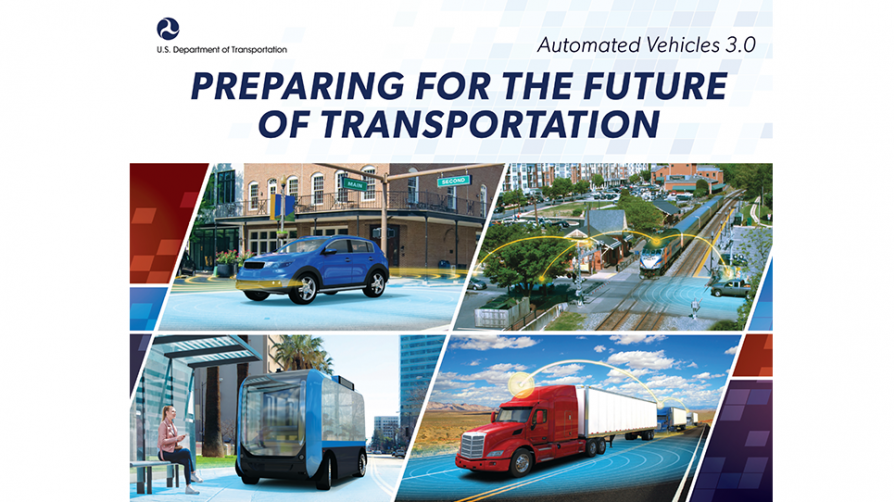
    THOUSAND PALMS, Calif. – The U.S. Department of Transportation’s Federal Transit Administration (FTA) Acting Administrator K. Jane Williams today joined SunLine Transit Agency officials and other local partners to highlight transit workforce training for innovative technologies of the future, including zero-emission transit buses.

    “Workforce development is a key priority for this Administration and the U.S. Department of Transportation,” said FTA Acting Administrator Williams. “The Administration’s economic policies have created unprecedented opportunities for American workers and American jobs, especially as technology continues to transform the employment landscape.”

    Williams joined officials at SunLine’s headquarters to highlight the agency’s efforts to improve workforce training and offer courses in the Fall of 2019.  They will focus on training current transit employees and providing them with skills that will support job retention for years to come.

    SunLine Transit Agency has been a leader in the public transportation industry by incorporating zero-emission buses and vehicles into its fleet, which now includes both hydrogen fuel cell and battery electric buses. These technologies are becoming more widely deployed throughout the transit industry as they can help lower operating costs and improve efficiencies in service.

    “The Federal Transit Administration is proud to partner with SunLine to help train the next generation of transit workers about the innovative technologies that are shaping the future of our industry,” said FTA Acting Administrator Williams.

    FTA has provided nearly $2 million in grant funding to help SunLine develop and demonstrate a comprehensive training program for the transit industry and to construct a state-of-the-art maintenance facility designed specifically for zero-emission buses.

    SunLine expects to begin construction on its West Coast Center of Excellence in Zero Emission Technology early next year. The center is a collaboration between numerous public and private organizations, including transit agencies, colleges, private industry, and government agencies that are involved in the development and maintenance of zero-emission buses.

  • ADULT MOSQUITO CONTROL APPLICATIONS PLANNED FOR PALM SPRINGS

    ADULT MOSQUITO CONTROL APPLICATIONS PLANNED FOR PALM SPRINGS

    INDIO, CA, May 21, 2019: In an effort to lower the number of mosquitoes and reduce the risk of disease transmission to people by infected mosquitoes, Palm Springs becomes the third city where the Coachella Valley Mosquito and Vector Control District has scheduled ultra-low volume (ULV) truck-mounted applications. Treatments in the cities of Coachella and Indio were delayed by high winds and have been rescheduled over the upcoming weekend.
    The District anticipates favorable weather conditions Thursday, Friday, and Saturday – May 23-25. The District plans to conduct the applications between 3:00 a.m. and 6:00 a.m., but they could take place anywhere between 8:00 p.m. and 8:00 a.m.

    • In Palm Springs, the application area is within Sunny Dunes Road, Vella Road, just south of Mesquite Avenue, and El Placer Road.
    • In Coachella, the application area is within Avenue 52, Tyler Street, Avenue 54, and Calle Empalme.
    • In Indio, the application area is within Terra Lago Parkway, Harrison Street, Avenue 44, Aztec Street, and Vista del Oro, excluding agricultural areas and water bodies.

    Application dates and times may change due to weather. Route maps and application updates are available on our website at www.cvmvcd.org/controlactivities.htm.

  • For your eyes only

    For your eyes only

    Give Your Eyes a Rest

    Tips to reduce digital eye strain

    Imagine how strained and tired your arms would feel if you carried around a 10-pound rock for 12 hours. That’s essentially what you’re doing to your eyes when you focus on digital devices all day.

    If you’re experiencing headaches, eye fatigue, burning, stinging, redness, watering, blurred vision or even pain in the neck and shoulders after extended time on your devices, you may be experiencing digital eye strain.

    A 2018 study from employee benefits company Unum found that nearly 40 percent of adults in the United States spend more than 12 hours a day looking at various digital devices, such as smartphones, tablets, laptops and television screens. In the same study, 34 percent of respondents said they feel they spend too much time on their devices.

    In today’s always-on digital culture, it can be hard to escape the need to stay connected, but making a few slight adjustments can have a positive impact on your overall well-being.

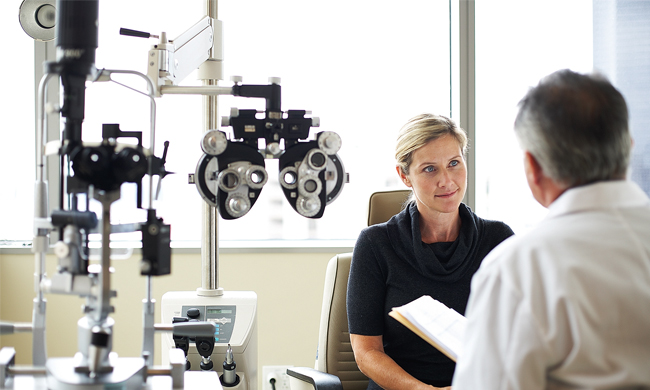
    Dr. Chris Wroten, an optometrist and partner at Bond-Wroten Eye Clinic, suggests a simple, easy-to-remember rule of thumb for relaxing your eyes.

    “Every 20 minutes, shift your eyes to look at an object at least 20 feet away for at least 20 seconds,” he said. “This 20-20-20 rule can help relax the eyes and allow them to focus on non-digital objects in the distance.”

    Other tips to reduce digital eye strain include:

    • Reduce the brightness or contrast on your screen to a comfortable level. You can find these controls in the settings of your phone or tablet and on the monitor or keyboard of your computer.
    • If your glossy screen is prone to glare, consider an anti-glare protector to reduce reflected light.
    • Try adjusting the ambient light around you. Strategically placed lamps can produce the proper lighting and result in less visual fatigue than fluorescent or LED light bulbs.
    • Maintain good posture and adjust your seating to assure you’re viewing screens at the proper angles and distances. The top of your computer monitor should sit just below eye level at about an arm’s length away from your face.
    • Ensure your prescription is up to date, especially if you wear corrective lenses. If it’s been longer than a year since your last eye exam, consider making an appointment with your eye doctor.

    Good visual health should be a component of maintaining your overall health and well-being. While the frequency of visits to your eye doctor typically varies for individual needs, most healthy adults should receive a comprehensive eye exam every year or two, which is included in most vision insurance plans. Eye exams can detect vision problems and allow you to adjust with corrective lenses, if necessary. This visit can also allow you to discuss any symptoms you may be experiencing, including eye strain.

    Many employers offer vision insurance, and your human resources department can usually provide information about vision plan options. Vision insurance can be an affordable solution and offer benefits typically not included in a health insurance policy. It can cover routine eye exams, most likely offer a benefit for corrective lenses and may provide discounts for additional lens options. Some vision carriers, like Unum, also offer online tools or mobile apps to help you manage your benefits and find qualified, in-network eye doctors in your area.

    For more information about digital eye strain, consumer research regarding device dependence or vision insurance, visit unum.com/vision.

    Photo courtesy of Getty Images

    (Family Features) SOURCE:
    Unum
  • Growing Up With Pets

    Growing Up With Pets

    4 Ways Kids can Benefit from Growing Up With Pets

    Pets can make an impression on every member of the family, but the bond between a child and a pet can become a special one with lifelong effects. From increased physical activity to a positive impact on confidence and social skills, there are many ways younger family members can benefit from growing up alongside a furry friend.

    These are a few ways kids can learn from growing up with a pet, courtesy of the CESAR® brand, and you can find more at Cesar.com/firstdayfriends.

    1. Increased Physical Activity – Whether taking a walk or playing fetch, pets provide unique opportunities for children to engage in physical activities, both indoors and out. As a bonus, encouraging children to expel energy alongside their pets can tire out both rambunctious parties, which can benefit the whole family.
    1. Empathy and Companionship – No matter what may be going on in a child’s life, a pet can be there through highs and lows as a constant friend. Research shows a pet can help reduce stress and moderate its impact. Having a companion animal like a cat or dog may provide the secure attachment and emotional support a child needs. This impact can also be seen through the CESAR brand’s First Day Friends program, which celebrates the benefits of the human-animal bond in the classroom.  
     
    1. Improved Social Skills and Self-Esteem – Kids with pets tend to have greater self-esteem, less loneliness and enhanced social skills, according to a study from the WALTHAM™ Centre for Pet Nutrition. Moreover, simply owning a pet can help facilitate conversation between children who may find social settings difficult, ultimately learning to form bonds and friendships with their peers.
    1. Responsibility – Pet ownership can help teach kids about responsibility and caring for another living being. Feeding, cleaning, walking and grooming are all activities that appropriately aged children can do with the help of an adult. With single-serving dog food options, it can be easy to teach children about their pets’ mealtime routines, including how much and how often to feed them. To make it even more special, the CESAR Home Delights™ line offers recipes modeled after a meal you might serve at your own table, so children can enjoy “sharing” their meals with their dogs.

    Photos courtesy of Fotolia

    (Family Features) SOURCE:
    Mars Petcare