Category: Communities

  • Stevie Nicks at the American Express concert

    Stevie Nicks at the American Express concert

    Story and Photos by Pat Krause

    The American Express Golf Tournament, Formerly the Bob Hope Classic, has a new Host this year with legendary PGA golfer Phil Mickelson. So many changes have been made over the years since Bob Hope held the tournament. Long gone are celebrities and Presidents playing. Years without a sponsor took its toll on that aspect, I guess. The PGA is trying something new with concerts. Last year’s concerts were a big hit with golf and music fans. This year they brought big names, Stevie Nicks from Fleetwood Mac and other bands on Friday night and Luke Bryant on Saturday night. 

    Stevie Nicks -Photo by Pat Krause

    The Stage was set up on the Driving Range at the Nickolas Stadium Course. The idea of concerts has been working. The fans started arriving on the driving range even before the end of the play. The galleries for the golfers I don’t think are as big as when celebrities played, but the ticket sales have improved over the last few years because of the concerts. Stevie Nicks fans numbered almost 22,000 people. Luke Bryant fans were even more with 23,000 filling the grassy areas. The sides of the course were filled with blankets and people watching. Golf carts from the local residents could be seen on the hill in large numbers. 

    I guess there isn’t anywhere you can watch the top PGA players in a big tournament and see a concert with top names for the $50.00 daily fee for each day of the shows. Both Stevie Nicks and Luke Bryant sang some of their big hits where guests sang along and knew the words. Stevie Nicks did a solo night after touring with the band, Fleetwood Mac. She has several solo tour dates for 2020. I heard that traffic was a bit of a problem as there is only one way in and one way out for those 20,000 plus fans. Hopefully, they will fix that for next year.

  • Israel is hosting the World Holocaust Forum

    Israel is hosting the World Holocaust Forum

    Israel gathers world leaders for Holocaust remembrance ceremony, Polish president bails after Putin invited to speak

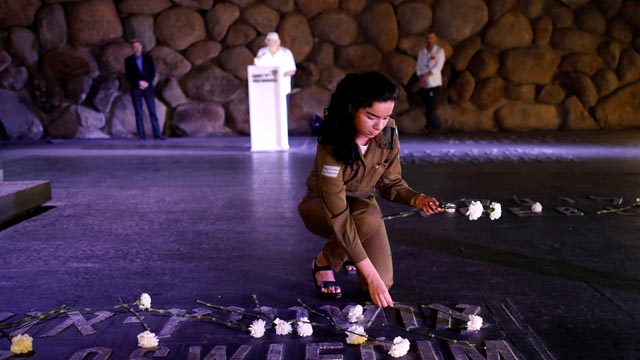
    Israel is hosting the World Holocaust Forum, marking the 75 years since the Nazi death camp at Auschwitz was liberated by Soviet troops. Present-day politics have cast a shadow over the solemn occasion, however.

    Delegations of 49 countries will attend the main event at the Yad Vashem memorial complex on Thursday afternoon, to remember the Holocaust and express commitment to fighting anti-Semitism going forward. 

    Offended by the fact that Russian President Vladimir Putin was invited to speak at the ceremony and he was not, Polish President Andrzej Duda refused to attend. He will be speaking at Poland’s own commemoration on Monday. Poland is embroiled in a bitter dispute with Russia over the causes and consequences of the Second World War.

    Speaking at a state dinner on Wednesday, Israeli President Reuven Rivlin has tried to smooth things over, urging politicians to “shape the future” and “leave history for the historians.”

    Israeli media have noted that this will be the largest gathering of diplomats in the country’s history. Caretaker PM Benjamin Netanyahu has several bilateral meetings lined up on the sidelines – including Putin, US Vice President Mike Pence, and French President Emmanuel Macron.

    That many VIPs have created a bit of a problem for Yad Vashem since their main hall can only hold 780 people. With more than half of that reserved for the visiting delegations, only a fraction of the estimated 100,000 or so Holocaust survivors who currently live in Israel will be able to attend.  

    Yad Vashem estimates that about a million Jews were killed in Auschwitz during the Second World War, as part of a campaign by Nazi Germany to exterminate European Jewry that has claimed an estimated six million lives and come to be known as the Holocaust, or Shoah in Hebrew.

    “A central Nazi motivation for the war was a hatred of Jews,” Yehuda Bauer, a 95-year-old historian and adviser to Yad Vashem, told the guests at Wednesday’s dinner, calling it a “deeply held belief” that Germans were threatened by the chimera “of a secret cabal, of an invented international Jewry, that controls both East and West.” This claimed the lives of millions of non-Jews; as a result, Bauer reminded, warning that similar beliefs still exist in the world. 

  • Dog Days of Summer

    Dog Days of Summer

    By Pat Krause

    UCR Palm Desert held a Dog Days of Summer, art show opening reception on July 19th. The event was held at Building 8, and if you have never been there, you are in for some real surprises as it has many features. There were 148 pieces of Art shown by 42 artists. UCR holds many art shows during the year, and this art show was about animals. Many people did RSVP, but there were a lot of people that just came. Each guest was asked to bring food for a dog or a cat. The donated pet foods went to the Friends of the Palm Springs Animal Pet Food Bank. Over 350 people came to inspect and maybe purchase the Art.

    Sid Craig, Gary and Sharon Cardiff, Fred and Linda Williamson, Artists Karen and Tony Barone. Lisette Haigler and Mitch Blumberg-Photo by Pat Krause

    This was a pet lovers paradise of Art. The event featured several works by Animalatarians Humanitarians, Karen, and Tony Barone along with many local and California professional artists. The Barones brought their, Haves and Have Nots, collection. There was almost every medium of art imaginable. Oils, acrylics, inks, photography, sculptures, and more. The upper level housed a cat and dog art area. Even fish were portrayed in art, birds, and butterflies and others that you do not usually consider animals.

    UCR Curator Terry Hastings and Carole Hatcher-Photo by Pat Krause

    Some of the artists were Sherry Molton, Paula and Christina Acosta, Jessica Fan, Joan Ryan, Diane Morgan, Robert Bell & Tory Cruz. Jenny Sanders brought inks on rice paper, Sunny Patton, watercolors, Abstract Art by Marconi Colindas, Terry Hastings brought sculptures made out of popsicle sticks. I think there was every piece of Art for someone’s taste. Most of the artworks were for sale. I saw only a few pieces that were not. Sasha Middleton is a volunteer photographer for the Palm Springs Animal Shelter, and she brought a few photos of cats and dogs that were up for adoption.

    UCR Palm Desert furnished the wines and foods for the reception. Terry Hastings from UCR was the curator the event. The walls were filled with an array of different kinds of Art on both levels. This show will run until August 24th. People will be looking for the next art show in Sept. I was told they hold a different art show every 2 months, so it is always something to look forward to.

  • Choosing the Right Doctor for Your Medical Care

    Choosing the Right Doctor for Your Medical Care

    Choosing the right doctor is one of the most important decisions people can make for their health. If you are unsure who to turn to for your general care, experts point out that internal medicine specialists, or internists, specialize in the prevention, diagnosis and treatment of a broad spectrum of illnesses that affect adults throughout their lives, making them the right choice for many adults.

    Before selecting an internal medicine doctor, it’s helpful to learn a little bit more about their training and specialties. Trained to care for adults, many general internal medicine doctors, or general internists, practice in an office-based setting as primary care physicians for adults, following patients from their teens through their senior years for ongoing medical care. Other general internists spend the majority of their time caring for hospitalized patients in the role of a hospitalist.

    Due to the broad, intensive nature of core internal medicine training, which requires a three-year residency program after graduating from medical school, general internists aren’t limited to one type of medical problem or organ system, making them especially well-qualified to care for patients with complex conditions or multi-system diseases.

    “Comprehensive education and training make the internist particularly suited to care for the whole person,” says American College of Physicians (ACP) President Dr. Robert M. McLean. “Many patients appreciate the tailored prevention and treatment plans that internists can provide. From the internist’s perspective, we value long-term relationships with patients and working closely with them to provide compassionate, quality care.”

    While training of general internists does not include pediatrics, obstetrics, or major surgery, patients requiring those services can turn to their general internist for recommendations and referrals.

    Internal medicine is a wide-ranging field, as many subspecialty areas of medicine require internal medicine training as a foundation, including allergists and immunologists, cardiologists, critical care doctors, endocrinologists, gastroenterologists, geriatricians, hematologists, hepatologists, infectious disease doctors, nephrologists, oncologists, pulmonologists, rheumatologists, and sleep medicine physicians.

    Training to become an internal medicine subspecialist is both broad and deep, and includes a three-year residency program plus one to three years of fellowship training, depending on the subspecialty. General internists even receive some training in each internal medicine subspecialty during their three-year residency program.

    To learn more about internal medicine, visit acponline.org, the website of ACP, a membership organization representing internal medicine doctors, and the largest medical specialty organization in the U.S.

    “With such in-depth training in the complete care of adults, internal medicine specialists and subspecialists are excellent choices to help patients navigate the increasingly complex world of medical care,” says Dr. McLean, a rheumatologist. “Whether you are healthy or have a chronic illness such as diabetes, cancer or heart disease, an internist can provide comprehensive, coordinated care.”

  • TAKE OFF FOR CLEVER CUISINE AT THE RUNWAY

    TAKE OFF FOR CLEVER CUISINE AT THE RUNWAY

    By Pamela Price

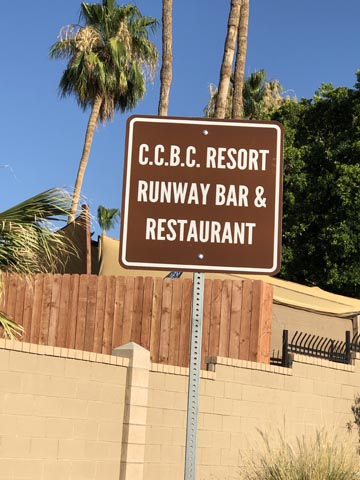
    When you are in the mood for a “Lost Luggage BBQ Burger” or a “Transcontinental JFK to PSP.” (all-beef hot dog topped with spicy brown mustard with your choice of sauerkraut or sautéed onions) you’ll find more than clever flight inspired comfort cuisine at the newest addition to the desert’s restaurant scene at the    Cathedral City Boys Club (CCBC) in Cove neighborhood in   Cathedral City’ Cove neighborhood.

     Robert Altman, President of this 3.5-acre resort, the largest clothing-optional gay men’s resort in Southern California has a flair for creativity and knows how to make hospitality happen.  He practices diversity with a flair; for example, there are four types of accommodations at CCBC, classic guest rooms, svelte suites, vintage (but stylish) RV’s and two tents. 

    Steps from suites, tents, and guestrooms is the inimitable Runway, open for breakfast  lunch and dinner, and   possibly entertainment, as I noted from the stage that descends from the ceiling. Reading the menu is better than surfing the web. 

     There’s even a “Safe landing veggie burger” and a full page devoted to Signature Pizzas, with the most creative your chance to “build your own pizza and flatbreads.”  Runway’s menu has a sense of humor but takes their specialties seriously.     Catch your next order of Flight Crew Nachos or Delta Wing Green Beans at The Runway where you don’t have to worry about clearing TSA before you take off.

    You can catch a glimpse of this the 3.5-acre haven of  desert hospitality from the air as   it is  in the the flight pattern of  the Palm Springs Airport, or    just navigate to The Runway at CCBC 68-300 Gay Resort Rd. Cathedral City. (800) 472 0836) www.CCBCresorthotelt.com

  • Magnitude 7.1 earthquake hits Southern California

    Magnitude 7.1 earthquake hits Southern California

    A 7.1 magnitude earthquake has been recorded in Southern California, according to the European Quake Monitor and the USGS.

    The quake registered near Ridgecrest, California, near Death Valley National Park, on Friday night. Tremors were reported from Los Angeles to San Diego.

    The quake was registered as 7.1 in magnitude by the US Geological Survey (USGS) and is the most massive earthquake in Southern California since 1999.

    The earthquake caught children in the middle of school performance, with screams heard as everything goes dark in this footage.

    Another one was filmed by a local Home Depot worker, who captured the shaking of the store’s large warehouse filled with everything from fridges to washing machines.

    People also posted pictures of enormous dents and cracks on roads, as well as this picture of a local highway, which was blocked by huge stones

    During a news conference Friday night, head of Kern County Fire Department David Witt said that no fatalities have so far been reported, but that emergency crews were responding to a large number of medical aid calls. He stated that several buildings in the county had collapsed following the shocks, but confirmed that no residents were trapped. An emergency shelter was set up for persons in need. Ripples from the quake were felt as far away as Phoenix, Las Vegas, Utah and Mexico.

    The quake superseded the previous day’s 6.4 magnitude earthquake, which had been the largest to hit Southern California in a decade and struck the same area during the afternoon, followed by two magnitude 4 aftershocks.

    The intensity of Friday night’s quake outstripped the notoriously destructive 1994 Northridge earthquake, though the damage is expected to be less due to it not striking an urban area. 

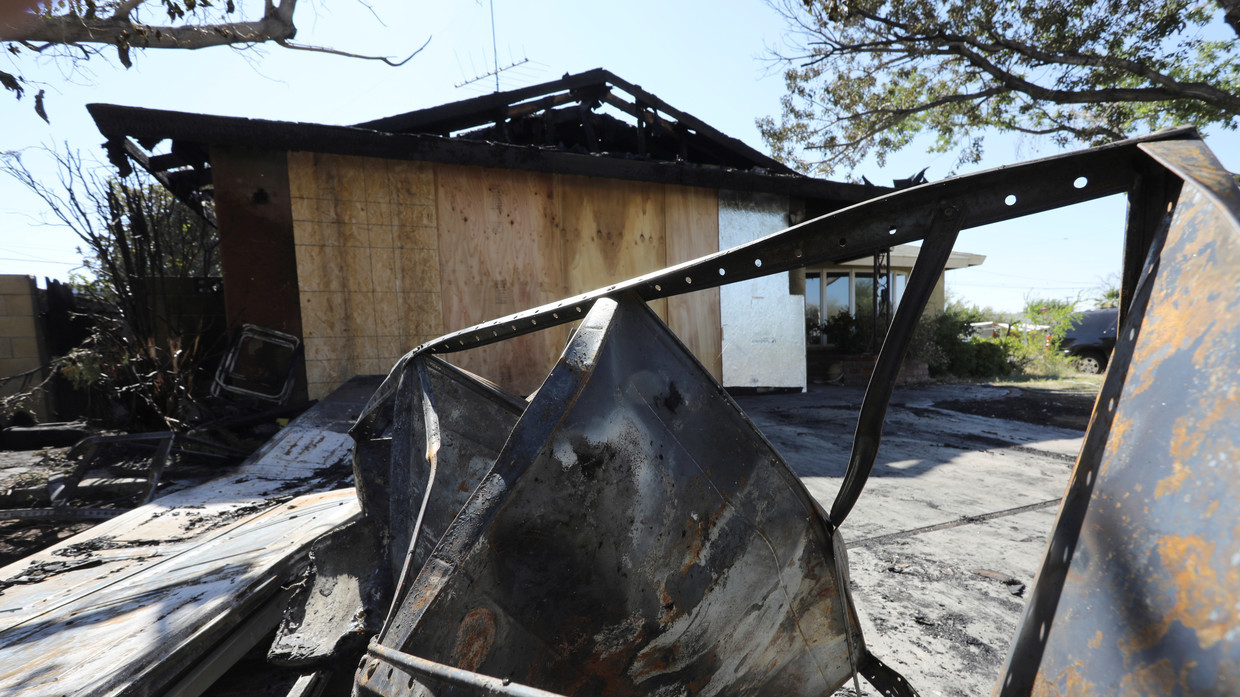
    “Homes shifted, foundation cracks, retaining walls down,” and one minor injury was reported in the northwest area of San Bernardino, according to the Fire Department. Several fires were reported in Ridgecrest.

    California could be hit with a series of large earthquakes after the 7.1 magnitude quake that struck on Friday, and aftershocks could go on for years, a seismologist with the US Geological Survey has warned.

    The south of the state was rocked by two earthquakes in as many days, with a 6.4-magnitude one hitting Ridgecrest on Thursday, the strongest in the state in over 20 years. Over 1,000 aftershocks have struck since. 

    “This is an earthquake sequence. It will be ongoing,” USGS seismologist Dr. Lucy Jones told reporters Friday.

    “There is about a one-in-twenty chance that this location will be having an even bigger earthquake within the next few days,” she reportedly added.

    A state of emergency has been declared in the city of Ridgecrest as officials deal with damage and injuries sustained in the quake. The natural disaster ruptured gas lines, caused fires, water mains damage, and knockouts to power and communications lines.

    When an aftershock is more significant than the main quake, the first quake is renamed as a foreshock, Jones explained. “A magnitude seven usually has aftershocks for years,” she warned.

    Friday’s earthquake was widely felt across Southern California, including greater Los Angeles, were shaking in some areas lasted about 40 seconds. Low-level rumbling extended as far north as the San Francisco Bay, beyond to Reno in neighboring Nevada, and as far east as Phoenix, Arizona.


  • Rancho Mirage’s Tolerance Education Center Hosts a Compelling Presentation

    Rancho Mirage’s Tolerance Education Center Hosts a Compelling Presentation

    Cambodia, a country located on the mainland of Southeast Asia, is a land of plains and great rivers. It is mainly a rural country.  In the capital city of Phnom Penh, the influences of many Asian cultures, alongside those of France and the United States, can be seen.   

    The vast majority of its population is comprised of Khmer (Cambodians).  Minorities include Chinese, Vietnamese, Muslim Cham-Malays, Laotians, and more.   

    On April 17, 1975, the Khmer Rouge (Red Cambodia), led by Pol Pot, seized control of the country, intending to turn the place into a communist agrarian utopia, a classless society. Cities were emptied, and millions of people were evacuated to labor camps.  Teachers, doctors, attorneys, and other educated people, as well as monks and the rich, were considered a threat.  

    It is estimated that between 1.7 and 2 million Cambodians died during the Khmer Rouge four year reign (21 to 24% of the country’s population).

    An invasion from neighboring Vietnam, on January 7, 1979, toppled the Khmer Rouge regime.

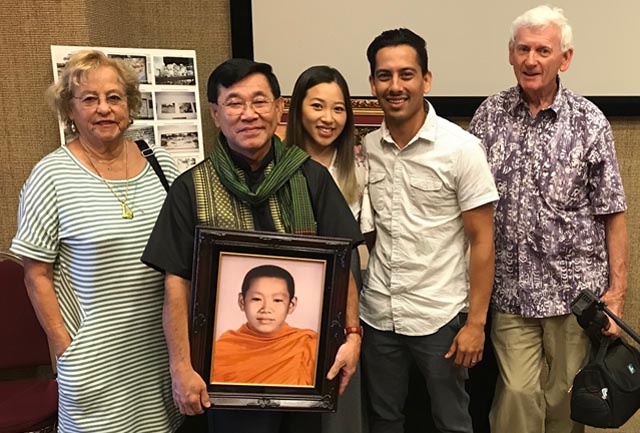
    On Wednesday, June 26, the Tolerance Education Center hosted William Eir, who shared his compelling Cambodian survival story.  After losing both his parents, Eir was placed in a Buddhist Temple and trained in becoming a monk.  He was 9 years old when the Khmer Rouge came into power.  Eir lost his brother and many other relatives.  He endured mental torture while being placed in solitary confinement for long periods.

    In 1983 Eir migrated to the United States.  He studied nursing.  On July 4th, 1988, his journey to U.S. citizenship became a dream come true.  Today Eir resides in Palm Springs. 

  • DESERT ARC HONORED

    DESERT ARC HONORED

    By Madeline Zuckerman

    Palm Desert, CA.  – Desert Arc, known for its outstanding work of enhancing the lives and creating opportunities for people with developmental and intellectual disabilities, was one of five recipients of the Riverside County Department of Waste Resources’ Sustainability Award on April 30th.  This annual Sustainability Award was established to distinguish the significant contributions of an organization’s efforts towards sustainability.  It is centered on the concept of recognizing innovative business practices that exemplify the 4 R’s: Reduce, Reuse, Recycle, and Rethink.  Every year the Board of Supervisors submits nominations from each of its five districts. 

                “We are celebrating our 60th Anniversary this year, and we are honored to receive this prestigious Sustainability Award,” stated Richard Balocco, President/CEO of Desert Arc.  “We are grateful to Supervisor Perez for nominating our Recycling Division, in recognition of our leadership role in the field of environmental stewardship program and serving people with disabilities,” Balocco continued.

    Back Row: Hans Kernkamp (Riverside County Dept. of Water Resources General Manager-Chief Engineer), Supervisor Kevin Jeffries, (First District), Supervisor Karen Spiegel (Second District), Supervisor Chuck Washington (Third District), Supervisor V. Manuel Perez (Fourth District). Second Row: Bonnie Woodrome, (EVMWD), and Clara Miramontes (City of Perris). First Row: Leah Di Bernardo (EAT Marktplace), Joanne Di Bernardo (EAT Marketplace), Christina Henry (EVMWD), Haley Munson (EVMWD), Isabel Carlos (City of Perris), Sabrina Chavez (City of Perris), Angelique Ontiveros (Desert Arc), and Frank Gonzales (Amazon Paint).

                Desert Arc’s Recycling Division, one of the five district winners selected for this prestigious Sustainability Award, was nominated by Riverside County Fourth District Supervisor V. Manuel Perez. Other distinguished honorees included Elsinore Valley Municipal Water District, Amazon Paint, Eat Marketplace in Old Town Temecula, and the City of Perris for its Live Well Perris Campaign and Grow Perris initiative.

                “Having toured Desert Arc’s Recycling Division, I have seen the hard work it does to recycle cardboard and electronics and keep these products from going to waste,” stated Riverside County Fourth District Supervisor V. Manuel Perez.  “The Recycling Center is driving environmental progress in the Coachella Valley and in our country.  For its leadership in sustainability, Desert Arc merits this recognition,” Perez continued.

                Commented Hans Kernkamp, General Manager-Chief Engineer of the Riverside County Department of Waste Resources, “these businesses and organizations are demonstrating a long-term commitment to creating healthier communities through sustainability and environmentally sound business practices.” 

                The end result of what Desert Arc achieves is clear: paper, cardboard, and electronics are being recycled instead of ending up in the landfill.  Whether it is picking up a big load of cardboard and inserting it into a baler, or diligently disassembling an old computer to uncover electrical components, there is always an opportunity to recycle.  Desert Arc fills a tractor trailer a week of both cardboard and shredded paper.

                “Desert Arc’s Recycling Division, headquartered in Indio, is thrilled to receive the Sustainability Award,” stated Angelique Ontiveros, Director of Business Services & Facilities for Desert Arc. “Our team works very hard each and every day to help make a difference in reducing waste and recycling resources in our local community.  It means a lot to all of us to be recognized among other innovative green business solutions in Riverside County,” Ontiveros continued.

  • Lee Iacocca, ‘father of Ford Mustang’ & savior of Chrysler, dies aged 94

    Lee Iacocca, ‘father of Ford Mustang’ & savior of Chrysler, dies aged 94

    Titan of the US automotive industry Lico ‘Lee’ Iacocca, who once led Ford and later Chrysler, died of natural causes Tuesday aged 94. He is survived by two daughters and eight grandchildren.

    Iacocca was widely credited with saving Chrysler from near-bankruptcy in the 1980s and was instrumental in the creation of both the iconic Ford Mustang and the Chrysler minivan.

    Born in Pennsylvania on October 15, 1924 to Italian immigrant parents, Iacocca would go on to become one of the most successful business tycoons in the US automotive industry. 

    Iacocca started at Ford Motor Company in 1946 and was one of the team who spearheaded development of the world-famous Ford Mustang. Though he was made president of Ford in 1970, he was fired just eight years later by Henry Ford Jr. in 1978, which he compared to “what it feels like to get kicked off Mt. Everest” in his autobiography.

    He then moved to Chrysler in 1978 and would become its CEO a year later, a role in which he was largely credited with saving the ailing company from imminent bankruptcy by securing $1.5 billion in bank loans from the US government in order to weather impending back-to-back recessions throughout the 1980s. 

    During Iacocca’s tenure as CEO, Chrysler would produce more fuel-efficient cars and more competitive products, staving off stiff competition from Asian and European imports and securing a sizeable portion of the US market share for a time. 

    He also starred in several Chrysler TV commercials in which he declared “if you can find a better car, buy it.”

    “He was one of a kind and will be dearly missed,” said Bill Ford, executive chairman of Ford Motor Company, as cited by Bloomberg.