Author: News Staff

  • New Appointments at College Strengthen Student Success

    New Appointments at College Strengthen Student Success

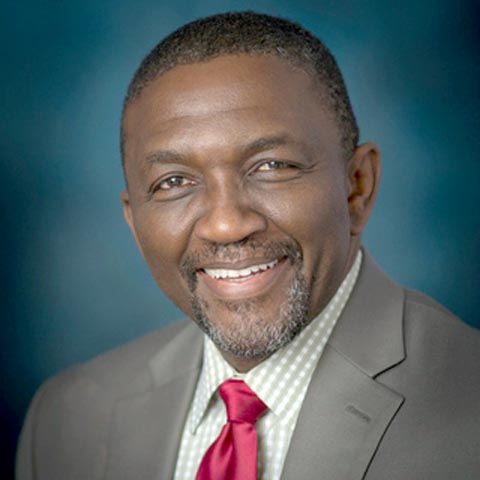
    PALM DESERT, CA — College of the Desert recently announced several staffing changes designed to enhance student success outcomes and strengthen the College’s executive leadership team. Appointments include the naming of Dr. Annebelle Nery as Vice President of Instruction, Jeff Baker as Interim Vice President of Student Services, John Ramont as Vice President of Administrative Services, and Dr. Scott Adkins as the Director of Education Centers, West Valley. 

    As Vice President of Instruction, Dr. Nery serves as the Chief Instructional Officer of the College, responsible for educational policy; academic programs and related services; for the accreditation processes. Advancement of student success and learning; instructional personnel decisions; budget development; enrollment management; fiscal accountability; program and curriculum development; educational centers (extended campuses); and the promotion and improvement of teaching and learning.

    For the past 20 years, Dr. Nery has been an integral part of the California university and community college systems. Last month, she was named as the state’s Distinguished CSSO of the Year, by the California Community Colleges Chief Student Services Officers Association for her work in developing the College’s innovative EDGE program. Her leadership in the K-14 Consortium; her efforts to provide mentoring services on campus and statewide; and advancement in the College’s Student Equity and Achievements gaps.

    She first joined the College as an adjunct professor in 2004. Since that time she has held various positions including being a full-time faculty member, Dean of Enrollment Services, Executive Dean of Institutional Effectiveness, and most recently Vice President of Student Success.

    “I thoroughly enjoy working with my colleagues at the College of the Desert, and I deeply respect the students and communities of the Coachella Valley,” said Dr. Nery. “

    Jeff Baker, who was previously the College’s Interim Vice President of Student Learning, will fill the Vice President of Student Services role on an interim basis, while the College recruits a permanent replacement. Baker has more than 20 years of community college leadership experience, previously holding positions at Ohlone College, Las Positas College, and Grossmont College.   

    John Ramont, the College’s Vice President of Administrative Services, has been with the College since 2014 serving as both the Director of Fiscal Services and as the Interim Vice President of Administrative Services. 

    As Vice President of Administrative Services, Ramont is responsible for overseeing fiscal services; operations and controls; budget development; purchasing; budgetary accountability; facilities services; maintenance and operations; information technology; construction and renovation projects; capital outlay and the bond program; and public safety services. As the Chief Financial Officer, he is also responsible for other business functions of the College’s operations, such as supporting organizations and contract services.

    Ramont’s prior experience includes supervisory and financial oversight roles for the Coachella Valley Unified School District, the County of San Diego Community Services Group and the Department of the Navy. 

    “My oldest daughter graduated from College of the Desert in 2017 and my son will graduate from the College later this spring. I started my educational journey at a community college, and I am a true believer in the system,” said Ramont. 

    The College also named Dr. Scott Adkins as the Director of Education Centers, West Valley. Responsible for supervising staff and coordinating programs for the Palm Springs and Desert Hot Springs campuses, Dr. Adkins has more than 35 years of educational experience, most of which has been spent in the Nashville area. He moved to the Coachella Valley in 2016 and has served as the College’s Interim Director of Education Centers and as an Educational Specialist and Interim Manager in the College’s Human Resources and Labor Relations Department.
    http://www.collegeofthedesert.edu/
  • SCAG Approves the Appointment of Kome Ajise as its Executive Director

    SCAG Approves the Appointment of Kome Ajise as its Executive Director

    LOS ANGELES – The Regional Council of the Southern California Association of Governments (SCAG) today approved the appointment of Kome Ajise as the organization’s new Executive Director.

    Ajise, who has served as Planning Director since November 2017, was selected to lead the nation’s largest metropolitan planning organization following an extensive search. He has 30 years of experience in regional planning and transportation, including serving as chief deputy director at the California Department of Transportation (Caltrans). Previously, he was Caltrans’ deputy director of planning and modal programs and was responsible for overseeing the Aeronautics, Mass Transportation, Rail, Transportation Planning, Local Assistance, and Research Innovation and System Information Divisions. 

    “Kome’s experience and his strong relationships at the local, state and federal level make him an ideal choice to lead SCAG into the future,” said SCAG President Alan D. Wapner. “This is a critical time for SCAG, as we work through our 2020 regional transportation plan, Connect SoCal, and provide our regional planning expertise to such important issues as reducing congestion, the housing crisis and attracting high-quality jobs to the region. Kome is a seasoned leader who understands the complex challenges we face in Southern California and throughout the state.”

    “It is an honor to have been tasked with this position. I want to thank Darin as it would not have been possible without his leadership. We have a lot of work to do, but we have an extraordinary team that has demonstrated, time and time again, its ability to tackle the kinds of planning and transportation challenges that come with a region as large and complex as ours. I look forward to working even more closely with everyone at SCAG, the 191 cities and the six counties we serve, at all levels,” Ajise said.

    He will assume his new role on an interim basis, effective immediately, pending the formal contract approval process.

  • THE PIRATES OF PENZANCE and DINNER THEATRE  Comes to the Rancho Mirage Amphitheater

    THE PIRATES OF PENZANCE and DINNER THEATRE Comes to the Rancho Mirage Amphitheater

    LimonCarr Desert Theatricals, in partnership with the City of Rancho Mirage, is excited to present THE PIRATES OF PENZANCEMay 17-18, 2019.  We are excited to announce that in addition to the general admission seating, we will add limited reserved table seating. 12 tables of 8 will be available for purchase in the front section, and WALLY’S DESERT TURTLE will be catering tables if ordered and providing food and beverage on site.  Anyone may pre-order off their Broadway In The Park Menu or order ala carte at the amphitheater. 

    The stunning 20-member cast includes local desert actors and Los Angeles/Orange County based actors accompanied by live music and is fully staged with sets and costumes.  Young Frederic, who, having completed his 21st year, is released from his duties to a band of tender-hearted pirates. He meets Mabel, the daughter of Major-General Stanley, and fall in love. Frederic soon learns, however, that he was born on the 29th of February, and so, technically, he is only five years old. His indenture specifies that he remains apprenticed to the pirates until his “twenty-first birthday,” meaning that he must serve for another 63 years. Bound by his sense of duty, Frederic’s only solace is that Mabel agrees to wait for him faithfully.

    Pirates of Penzance: May 17 and 18, 2019

    Gates open at 6 pm and performance begins at 7:30 p.m.

    General admission Ticket price: $37.00* (includes all fees). General admission tickets and Table reservations are available on the website at www.desert-theatricals.com

    Rancho Mirage Amphitheater is located at 71560 San Jacinto Dr, Rancho Mirage, CA 92270

    Gates open for all shows at 6 pm so come early for general seating.

    WALLY’S DESERT TURTLE will provide food and beverage for purchase

  • Rancho Mirage’s Tolerance Education Center Celebrates Diversity

    Rancho Mirage’s Tolerance Education Center Celebrates Diversity

    Diversity encompasses the inclusion of cultures, ethnicities and groups, religious beliefs, socio-economic backgrounds, sexual orientation and gender identity, mental and physical capacities, to name just a few.

    From left: Dean Holencamp, Leslie Page, Jerry Ayala and Rob Lebow  -Photographs by Dimitri Halkidis Photography

    By learning from one another we embrace humanity’s beautiful differences thus strengthening our communities.

    The world today is more interconnected than ever.  Learning openness and appreciating differences is important to many aspects of modern life.

    The Tolerance Education Center, whose mission is to provide a venue where diverse perspectives, cultures and values are accepted and celebrated, and Boo2Bullying, an organization that seeks to eradicate bullying, intolerance and discrimination, partnered together to host ‘Celebrating Diversity’ exhibition.  

    From left: Elaine Gershenson, Erica Scott, Curator Talia Lizemer-Hawley, and Michelle Veliz -Photographs by Dimitri Halkidis Photography

    Students, artists, film-makers, and the community at large were invited to submit entries that will encourage awareness of the human differences and promote their understanding and acceptance. Each entry was accompanied by an inspirational artist statement.  Entries included film, photography, drawings, paintings, collages, and more.   

    The exhibit was curated by Dimitri Halkidis, President and Founder of Boo2Bullying.

    On Thursday, March 7th, the Tolerance Education Center held the exhibit opening reception, an event that was very well attended by Coachella Valley’s diverse population: students and their families accompanied by their teachers; artists; film-makers; guests and staff.

    Some of the participating schools, artists, and film-makers include, Mount San Jacinto High, Cathedral City High, Palm Springs High, Palm Valley, Xavier Prep, Palm Desert Charter Middle, Juan-Manuel Alonso, Jeffery Coleson, Ulrike, Rob Lebow, Tiffany Tiara,and Lance Sadia, to name a few.

  • Community Health Centers Press Congress for Long-Term Funding

    Community Health Centers Press Congress for Long-Term Funding

    SACRAMENTO, Calif. – Seven million Californians get medical treatment at Community Health Centers each year, and those centers say funding issues for this crucial part of the safety net are throwing the system into chaos.

    Starting today, thousands of providers are gathering in Washington, D.C., to chart a path forward and fan out across Capitol Hill to meet with lawmakers.

    James Luisi, chief executive of NEW Health in Boston and board chair for the National Association of Community Health Centers, said he wants Congress to approve the Community Health Investment, Modernization and Excellence (CHIME) Act, which would approve funding in five-year blocks.

    “We want that funding extended, hopefully for at least another five years,” he said, “so that we can have some stable funding; and so that health centers will be able to access capital and meet their needs without worrying about going back and advocating for that funding to be extended again.”

    Community health centers treat people even if they’re uninsured or can’t pay in full. But last fall, Congress let their funding run out and took several months to pass a temporary fix. Luisi noted that the health centers have bipartisan support, but in the past, a longer-term funding solution has been crowded out in Congress by other priorities.

    Andie Martinez Patterson, director of government affairs for the California Primary Care Association, a nonprofit that represents community health centers in California, said their success must be a priority because they’re on the front lines in the fight against poverty, the opioid crisis and chronic diseases.

    “They provide access to anyone regardless of immigration status, regardless of ability to pay,” she said. “They provide comprehensive services – so, besides just primary care, most of them have dental as well as behavioral health services.”

    Across the country, community health centers serve 28 million patients per year, including more than 355,000 veterans and 8 million children, at more than 11,000 clinics.

  • National Week of Conversation Aims to Break Down Political Barriers

    National Week of Conversation Aims to Break Down Political Barriers

    SANTA MONICA, Calif. – This is the second National Week of Conversation, and its organizers hope it becomes an annual event that fosters reconciliation and a stronger sense of common purpose among Americans. 

    Discussion events begin today throughout the country – some in person, and others online. They’re meant to get people talking – but more important, really listening – to views about major issues, like racial injustice and gun rights, where people too often talk past each other. 

    Jaclyn Inglis, partnerships director at the National Conversation Project, says the tendency for each side to ignore or even disdain the other has led to poor solutions and political standoffs in the past. 

    “And so, we think a way to really heal this is to encourage people to come together,” says Inglis, “to reconnect through conversations with people with diverse perspectives, where we come together to listen first to one another, to truly understand where each other is coming from.”

    On Saturday in Santa Monica, a group known as “Better Angels” is hosting what it calls a “Red/Blue Workshop on Bridging the Political Divide.” Another is set for the following Saturday, Apr. 13, in Rancho Palos Verdes. 

    There are also many virtual conversations set for the coming week. You can find out more online at nationalweekofconversation.org, listenfirstproject.org or better-angels.org.

    Inglis says society would be better off if more people would step outside their “one-sided echo chambers” amplified on cable news and social media, and reach out to people around them.

    “Just go out and start conversations with friends and family, and neighbors about some of these issues,” says Inglis. “We want people to join in these conversations already happening, but also, this is about really, even in their tight-knit community, to be able to engage in these conversations.”

    She says healthy debate often produces the best ideas for resolving problems, but people have to listen to each other. The “partisan gap” has more than doubled in the last 20 years – from 15 percentage points to 36 – according to The Pew Research Center.

  • Calif. Makes Progress Keeping Foster Kids Out of Group Homes

    Calif. Makes Progress Keeping Foster Kids Out of Group Homes

    SACRAMENTO, Calif. – Foster kids do much better when placed with a family, compared with a group home, according to a new report that says California is making good progress on that score.

    Researchers from the Annie E. Casey Foundation found that the Golden State went from 83% of foster kids in a family placement in 2007 to 87% a decade later.

    Rob Geen, director of policy and advocacy reform at the Casey Foundation, said this shift, especially toward placement with family members, will pay off in a big way for society as kids get older.

    “When children are placed with relatives, they’re more likely to finish school, they’re more likely to be employed or find employment later, they’re less likely to become early parents,” he said. “They’re more likely to succeed in families when they have families of their own. That is one trend which is really important; we’re using relatives more.”

    California lawmakers in 2015 passed the Continuum of Care Act, which put a time limit on the use of group homes and standardized the licensing of foster parents, whether or not they are family members. 

    Assemblymember Mark Stone, D-Monterey Bay, who wrote the bill, said the state should give priority to the hardest-to-place cases.

    “Older kids and kids who have longer-term trauma, more Adverse Childhood Experiences, they are sometimes difficult to place, because we don’t always have individualized placements for them,” he said. “And that is one of the things that is missing in California, is our ability to support the kids with the highest needs.”

    Daniel Heimpel, publisher of the Chronicle of Social Change and an expert on foster care, said Congress should direct more federal dollars to helping foster families succeed.

    “As we move out of group homes,” he said, “we have to be very careful to ensure that the relative, but also the non-relative foster parents, are being supported, so that they can make sure these kids have everything they need. “

    Last year, Congress passed the Family First Prevention Services Act, which limits federal funds for group homes in a bid to encourage states to find more family placements. 

    The AECF report is online at aecf.org, the text of the Family First Prevention Services Act is at congress.gov, and Assembly Bill 243, the Continuum of Care Act, is at leginfo.legislature.ca.gov.

  • THE STEINWAY SOCIETY HONORS LOUISA CASTRODALE AND PHYLLIS EISENBERG

    THE STEINWAY SOCIETY HONORS LOUISA CASTRODALE AND PHYLLIS EISENBERG

    By Pamela Price

    The Steinway Society of Riverside County presented their 17th Annual Doctors Concert at Desert Island in Rancho Mirage on February 10.   According to Ruth Meir, Their   CEO and Founder, this popular event touches the lives of nearly 30,000 students in junior and senior high schools throughout Riverside County with musical education.

    Phyllis Eisenberg -Photo Pat Krause

    The need for reviving music in public schools was the result of cutting back on the arts budget in 1980.  Riverside County met the challenge when Ruth Moir, CEO, and Founder of the Steinway Society educated herself to “to filling the artistic gap” as the funding for music education was fading away. This unfortunate situation was remedied in 2002 when The Steinway Society came to the rescue. The gift of music education has since flourished throughout Riverside County.

    Nearly 300 guests attended this year’s 17th annual Steinway Society event.  The focus was on music from start to finale.  Denise Ondishko, pianist and National Board-Certified Teacher, greeted guests as they arrived playing a range of popular and classic favorites.

    The program began at 11:30   AM.   KCBS TV with” Brooke Beare serving as Mistress of Ceremonies.  Gold Sponsors were the   Coeta and Donald Barker   Foundation and the Palm Springs Philharmonic.

    The Silver Sponsors were   Dr. Anthony    Bassanelli and Family, D.I. Voorhees and Sarah Milmet.

    The Bronze Sponsors were   Donna MacMillan, Carole    Roos Haller, Sandra Van Ert, Yvonne Maloney, and Helene Galen. 

    Phyllis Eisenberg and Ruth Moir-Photo Pat Krause

     “The Steinway Society’s admirable role I am providing free musical programs such as classic concerts in public schools are legendary,” said Phyllis  Eisenberg, the event’s Honoree.   Jazz and Master Classes exemplify this to Mr.  McSymphony, a series of five classes bringing music appreciation to 1st through 5th-grade students.  

    The program opened with the Excellence in Education Award presented to Louisa Castrodale, the Visual and Performing Arts Coordinator for the Palm Springs Unified School   District. Performances by three doctors, Dr.  Anthony Bassanelli, Dr. Scott Russell and Dr. Vanessa Sheldon.  

    Were followed by Kathleen Gurning, a prize-winning pianist and an 8th-grade student at Day Creek Intermediate School in Rancho Cucamonga.

    The event concluded with words From Honoree, Phyllis Eisenberg, known for her philanthropic commitments from the   Israel Guide Dog Center for the Blind to the McCallum Theatre Muses. The Palm Springs Art Museum and Tools for Tomorrow among other charitable organizations she graciously accepted the award commenting that The Steinway Society has brought the gift of music to countless students throughout Riverside County.

  • Not a Blame Game: Women Demand Equal Pay and Equity

    Not a Blame Game: Women Demand Equal Pay and Equity

    Monday was April Fool’s Day, but an observance today is no joke to working women in Ohio and across the U.S. 

    April 2 marks Equal Pay Day, the date on the calendar representing how far into 2019 a woman has to work to earn the equivalent of a man’s wages in 2018. According to the Economic Policy Institute, women were paid almost 23 percent less than men in 2018, when accounting for race and ethnicity, education, age and location. 

    Kelley Griesmer, president and CEO of the Women’s Fund of Central Ohio, argued it will take squashing decades of implicit bias in society to close the gap.

    “This isn’t a blame game. It’s not about men setting out to really cause women some sort of pain, but it is all of this bias that has existed for years and years and years,” Griesmer said. “And there has to be an equity lens. The only way you get to true equality is through equity.”

    Griesmer explained that even if women started earning equal pay today, it would not cancel out the significant wealth gap that’s resulted from pay inequity over time. She believes a discussion is needed on how women can build wealth throughout their lives and become economically secure.

    Carolyn Casper, president of the Ohio Chapter of the National Organization for Women, noted racial disparities within the gender pay gap also need to be addressed. While women on average earn about 77 cents for every dollar a man earns, for black and Hispanic women it’s about 66 cents. And, Casper added, there are widespread implications.

    “This is not a women’s issue; this is a human rights issue,” Casper said. “This penalizes our families, it penalizes our community and it’s not an equitable way to treat workers. Our contributions over history have been very significant and they’ve yet to be recognized. “

    Casper is hopeful that policies such as the Paycheck Fairness Act will make a difference. The legislation, passed last week by the U.S. House, would ban employers from asking job applicants how much they previously made, forbid businesses from retaliating against workers who share wage information, and increase penalties for equal-pay violations.

    This story was produced in association with Media in the Public Interest and funded in part by the George Gund Foundation.

  • PALM SPRINGS AERIAL TRAMWAY TO REOPEN

    PALM SPRINGS AERIAL TRAMWAY TO REOPEN

    Following a nearly two-month closure and almost $4 million in repair costs and lost revenue, the Palm Springs Aerial Tramway is poised to reopen Monday.

    The tramway has been closed since a Feb. 14 storm saturated the area and washed out some streets, including Tramway Road, the main route to the aerial attraction.

    The first car is scheduled to leave at 10 a.m., with the box office opening at 9:30 a.m. Online ticket sales will resume April 8, tramway officials said.

    “While the tramway was on track for record attendance in the fiscal year 2018-19, it is estimated that nearly 100,000 visitors were displaced due to the 46-day closure,” spokeswoman Cara Youngman said. “The tram also estimates that the incident resulted in almost $4 million in repair costs and lost ticket revenues.”

    In addition to the washed-out roadway, the rain caused damage to the attraction’s main power line, along with the Valley Station water tank and Mountain Station roof, Youngman said.

    Last month, the Mount San Jacinto Winter Park Authority approved $351,071 to fund identified repairs, while also setting aside up to $500,000 for other potential repairs, engineering, and inspections, at the discretion of the general manager. The authority also approved $300,000 to continue paying the tramway’s roughly 70 employees through April 1.

    “We truly look forward to welcoming back tram visitors beginning April 1st,” Tramway General Manager Nancy Nichols said. “Also, I wish to extend a sincere thank you to the entire Tramway staff for their efforts during our closure. And I’d like to offer a special thanks to our maintenance department for their tireless repair efforts and to our security department for their gracious greeting at our entry gate of disappointed patrons.”

    The tramway is billed as the world’s largest rotating tramcar and was opened in 1963. It carries visitors 2-and-a-half miles, a trip that takes about 10 minutes.

    More information can be found at pstramway@pstramway.com.