
Category: California News
-

Desert Star Weekly April 1, 2020 issue!
https://issuu.com/desertstar/docs/dstarweekly_april_1_2020_web_opti -

An early look at Coachella 2020
By Robert Kinsler
The lineup for Coachella 2020 reveals that Goldenvoice – creators of the annual two-weekend event held at the Empire Polo Field in Indio – continues to challenge and propel discerning concertgoers into the future with a diverse and exciting cast of artists.
Weekend One of the Coachella Valley Music and Arts Festival will be held April 10-12, 2020, with Weekend Two of the event to follow with the same schedule of artists set to perform April 17-19, 2020.
The hard-rocking Rage Against the Machine will headline on both Fridays of Coachella fest while rapper Travis Scott will take the main stage on Saturday nights and hip hop artist Frank Ocean will wrap things up with his appearance on Sunday nights.
Digging deeper, the range of artists set to perform at Coachella ranges from celebrated Radiohead front man Thom Yorke and English indie rockers Friendly Fires to pop singer Carly Rae Jepsen, South Korean K-pop superstars BIGBANG, English synth-pop band Hot Chip and record producer/DJ Calvin Harris. Los Angeles-based quartet Chicano Batman makes an eagerly-awaited return to the event, having last performed in Indio both weekends in 2017.

While Coachella emerged in October 1999 featuring mostly modern and alternative rock artists, the festival has grown into a major showcase of seemingly all genres of music including Americana, world music, funk, neo-soul, EDM, urban, art rock, dream pop, and Latin.
One of the most exciting artists slated to perform this year is famed film composer Danny Elfman, who rose to fame in the late 1970s and ‘80s as the leader of genre-defying rock group Oingo Boingo. In fact, Oingo Boingo was a featured artist at the US Festival on May 28, 1983; the US Festival held at Glen Helen Regional Park near Devore, San Bernardino, was a forerunner of Coachella (staged by Apple co-founder Steve Wozniak and concert promoter Bill Graham in 1982 and 1983).
Elfman’s unique approach with Oingo Boingo was not lost on Hollywood – and since scoring “Pee-wee’s Big Adventure” in 1985 – he has gone on to score more than 100 feature films including “Batman,” “Alice in Wonderland,” “Spider-Man,” “Edward Scissorhands” and “Good Will Hunting.” His greatest achievement may well be the songs and score for the Tim Burton-produced 1993 animated masterpiece “The Nightmare Before Christmas.”
In a January 2 post on Twitter Elfman noted: “Past, Present, and Future! From Boingo to Batman and Beyond!” hinting at a set that will truly surprise. With Elfman having retired from performing typical rock concerts following a high-profile concert at Universal Amphitheatre on Halloween night in 1995, his Coachella sets promise to be very special.
For more information on all things Coachella, visit www.coachella.com. -

Magnitude 7.1 earthquake hits Southern California
A 7.1 magnitude earthquake has been recorded in Southern California, according to the European Quake Monitor and the USGS.
The quake registered near Ridgecrest, California, near Death Valley National Park, on Friday night. Tremors were reported from Los Angeles to San Diego.
The quake was registered as 7.1 in magnitude by the US Geological Survey (USGS) and is the most massive earthquake in Southern California since 1999.
The earthquake caught children in the middle of school performance, with screams heard as everything goes dark in this footage.
Another one was filmed by a local Home Depot worker, who captured the shaking of the store’s large warehouse filled with everything from fridges to washing machines.
People also posted pictures of enormous dents and cracks on roads, as well as this picture of a local highway, which was blocked by huge stones
During a news conference Friday night, head of Kern County Fire Department David Witt said that no fatalities have so far been reported, but that emergency crews were responding to a large number of medical aid calls. He stated that several buildings in the county had collapsed following the shocks, but confirmed that no residents were trapped. An emergency shelter was set up for persons in need. Ripples from the quake were felt as far away as Phoenix, Las Vegas, Utah and Mexico.
The quake superseded the previous day’s 6.4 magnitude earthquake, which had been the largest to hit Southern California in a decade and struck the same area during the afternoon, followed by two magnitude 4 aftershocks.
The intensity of Friday night’s quake outstripped the notoriously destructive 1994 Northridge earthquake, though the damage is expected to be less due to it not striking an urban area.
“Homes shifted, foundation cracks, retaining walls down,” and one minor injury was reported in the northwest area of San Bernardino, according to the Fire Department. Several fires were reported in Ridgecrest.
California could be hit with a series of large earthquakes after the 7.1 magnitude quake that struck on Friday, and aftershocks could go on for years, a seismologist with the US Geological Survey has warned.
The south of the state was rocked by two earthquakes in as many days, with a 6.4-magnitude one hitting Ridgecrest on Thursday, the strongest in the state in over 20 years. Over 1,000 aftershocks have struck since.
“This is an earthquake sequence. It will be ongoing,” USGS seismologist Dr. Lucy Jones told reporters Friday.
“There is about a one-in-twenty chance that this location will be having an even bigger earthquake within the next few days,” she reportedly added.
A state of emergency has been declared in the city of Ridgecrest as officials deal with damage and injuries sustained in the quake. The natural disaster ruptured gas lines, caused fires, water mains damage, and knockouts to power and communications lines.
When an aftershock is more significant than the main quake, the first quake is renamed as a foreshock, Jones explained. “A magnitude seven usually has aftershocks for years,” she warned.
Friday’s earthquake was widely felt across Southern California, including greater Los Angeles, were shaking in some areas lasted about 40 seconds. Low-level rumbling extended as far north as the San Francisco Bay, beyond to Reno in neighboring Nevada, and as far east as Phoenix, Arizona.
-

Education Groups Call for Oversight of CA State Tax Credits
SACRAMENTO, Calif. – Education groups are calling for more sunshine in the Golden State, with a bill that demands greater accountability for the billions of dollars of tax breaks California gives to commercial interests.
Senate Bill 468 would sunset many business tax credits by 2023 and require that any extensions be justified with hard data. State legislative analysts would be directed to determine whether the tax credits are really bringing the benefits they promised.
“The people of California give enormous tax breaks to a lot of corporations,” said state Sen. Hannah-Beth Jackson, D-Santa Barbara, who authored the bill, “and it’s to the detriment of our schools and to the detriment of other policies, like creating more affordable housing and working on wildfires.”
SB 468, which has a hearing set for May 1, targets nine of the most generous tax breaks. One, known as the “Water’s Edge” credit, determines how multinational corporations pay their state taxes. Others subsidize airline fuel on international flights or give sales-tax exemptions for animal feed, farm machinery and custom software. Each tax break has its own supporters, many of whom say the state should be more-business friendly, not less.
The California Department of Finance estimates that, from 2008 to 2021, tax incentives will have cost the state $500 billion. Dennis Meyers, assistant executive director for government relations for the California School Boards Association, said the analyses would provide lawmakers with the data to decide which tax breaks might have outlived their usefulness.
“It could lead to $3 billion more a year, if all of these show that they’re not producing and not worthy of reinstatement,” he said. “That could lead to significant investment to move that needle in per-pupil funding.”
Proposition 98 requires that schools automatically get more funding as the general fund grows. California ranks 44th in the nation in per-pupil spending, despite being the wealthiest state and the world’s fifth-largest economy.
The text of SB 468 is online at leginfo.leglslature.ca.gov.
-

Report: CA Teacher Shortage Persists, Hits High-Poverty Schools Hardest
SACRAMENTO, Calif. — In California and across the nation, districts are struggling to hire enough teachers. And the shortage is getting worse, according to a new report.
There remains a supply gap of about 110,000 teachers nationwide as of last school year, primarily because more teachers are quitting or switching schools, and fewer people are entering the profession. Emma Garcia coauthored the report from the Economic Policy Institute. She said a lot of the problems could be fixed with more investment to raise salaries, lower classroom sizes and better fund schools overall.
“Working conditions, including pay, school climate and professional development, need to be improved,” Garcia said.
California is in the bottom ten nationwide – 44th for per-pupil spending. However the state has spent $200 million over the past few years to attract, train and retain more teachers.
A 2018 study by the Learning Policy Institute found the shortages are particularly acute in math, special education, science and bilingual education – and these issues are more severe in high-poverty school districts. It also found that school districts are increasingly hiring under-qualified applicants.
Garcia said to reverse the slide and attract bright young people to the profession, the country needs to give teachers the same respect – and earning potential – as they accord other professionals such as doctors and lawyers.
“It’s also a matter of societal changes, that we see teachers more like we see other professions, that we value teachers, that we appreciate the work that they do,” Garcia said.
Some experts say the years of layoffs and cost-cutting during the recession discouraged people from becoming teachers and created so much stress on teachers that many opted to leave the profession. The EPI report also found from 2008 to 2016, the U.S. saw more than a 27 percent drop in people completing teacher preparation programs and 15 percent drop in people receiving an education degree.
-

ANA LPGA Championship
The ANA LPGA Championship had an exciting finish again this year. The leader board was constantly changing with one person in the lead most of the time. Jin Young Ko was the most consistent leader and won the tournament on Sunday. She led with a -9 and finished with a birdie on the final hole 18 to win with a -10. It was her first win in a Major LPGA tournament and her second win in 3 weeks. Maybe a new golfer to watch for future wins this season.

Caddie David Brooker, winner Jin Young Ko, and manager Soo Jin Choi make the famous leap into Poppies Pond -Photo Pat Krause She said in an interview that she couldn’t believe she won. Ko said she tried to stay calm ahead of the nerves. She said her
caddie told her that she was two strokes ahead and just to have fun to alleviate the nerves. Her caddie, David Brooker, has a lot of experience with golfers as he has helped two other winners, Grace Park, and Lorena Ochoa, at the ANA tournament. He made the jump into Poppies Pond now for the third time.Mi Hyang Lee placed second with a -7 which is her best finish in a Major tournament. She said she didn’t watch the leader board and didn’t know she placed second until it was over. The course was in spectacular shape, but the fairways were narrow, and the rough was long which made it more of a challenge to all golfers.

Jessica Korda signs a flag for Katelyn Debuskey -Photo Pat Krause Former winner Lexy Thompson held a -6 under par to land her in 3rd place. She said she was playing great Sunday and the course was tough. There was a bit of a wind but nothing like years past. The heat was probably the most significant obstacle as it reached 91 on Sunday for the final round. Lexy, a former winner here, said her caddie helped her to play aggressively on the final round to get her into contention for a win. Lexy said she loves this tournament because of its history, the tradition of jumping into Poppies Pond, and the Fans. Lexy is considered a fan favorite at this tournament and signed autographs at the end for all her fans.
Carlotta Ciganda and In-Kyung Kim tied for 4th. It seems after listening to the interviews that caddies are extremely important to the players. They calm the women, help them with putting, encourage them when needed and help them play more aggressively to climb the leader board. An experienced caddie can make the difference between a loss and a win.
-
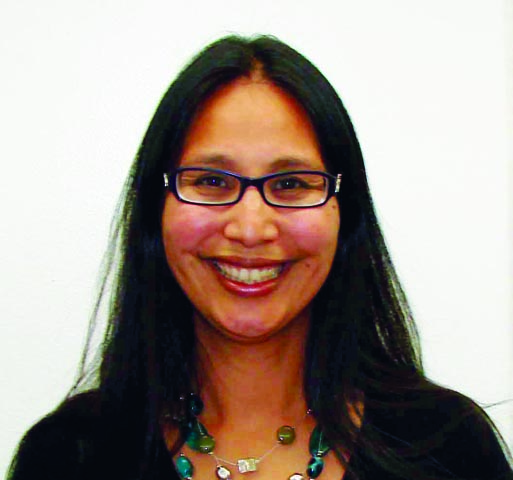
New Appointments at College Strengthen Student Success
PALM DESERT, CA — College of the Desert recently announced several staffing changes designed to enhance student success outcomes and strengthen the College’s executive leadership team. Appointments include the naming of Dr. Annebelle Nery as Vice President of Instruction, Jeff Baker as Interim Vice President of Student Services, John Ramont as Vice President of Administrative Services, and Dr. Scott Adkins as the Director of Education Centers, West Valley.
As Vice President of Instruction, Dr. Nery serves as the Chief Instructional Officer of the College, responsible for educational policy; academic programs and related services; for the accreditation processes. Advancement of student success and learning; instructional personnel decisions; budget development; enrollment management; fiscal accountability; program and curriculum development; educational centers (extended campuses); and the promotion and improvement of teaching and learning.
For the past 20 years, Dr. Nery has been an integral part of the California university and community college systems. Last month, she was named as the state’s Distinguished CSSO of the Year, by the California Community Colleges Chief Student Services Officers Association for her work in developing the College’s innovative EDGE program. Her leadership in the K-14 Consortium; her efforts to provide mentoring services on campus and statewide; and advancement in the College’s Student Equity and Achievements gaps.
She first joined the College as an adjunct professor in 2004. Since that time she has held various positions including being a full-time faculty member, Dean of Enrollment Services, Executive Dean of Institutional Effectiveness, and most recently Vice President of Student Success.
“I thoroughly enjoy working with my colleagues at the College of the Desert, and I deeply respect the students and communities of the Coachella Valley,” said Dr. Nery. “
Jeff Baker, who was previously the College’s Interim Vice President of Student Learning, will fill the Vice President of Student Services role on an interim basis, while the College recruits a permanent replacement. Baker has more than 20 years of community college leadership experience, previously holding positions at Ohlone College, Las Positas College, and Grossmont College.
John Ramont, the College’s Vice President of Administrative Services, has been with the College since 2014 serving as both the Director of Fiscal Services and as the Interim Vice President of Administrative Services.
As Vice President of Administrative Services, Ramont is responsible for overseeing fiscal services; operations and controls; budget development; purchasing; budgetary accountability; facilities services; maintenance and operations; information technology; construction and renovation projects; capital outlay and the bond program; and public safety services. As the Chief Financial Officer, he is also responsible for other business functions of the College’s operations, such as supporting organizations and contract services.
Ramont’s prior experience includes supervisory and financial oversight roles for the Coachella Valley Unified School District, the County of San Diego Community Services Group and the Department of the Navy.
“My oldest daughter graduated from College of the Desert in 2017 and my son will graduate from the College later this spring. I started my educational journey at a community college, and I am a true believer in the system,” said Ramont.
The College also named Dr. Scott Adkins as the Director of Education Centers, West Valley. Responsible for supervising staff and coordinating programs for the Palm Springs and Desert Hot Springs campuses, Dr. Adkins has more than 35 years of educational experience, most of which has been spent in the Nashville area. He moved to the Coachella Valley in 2016 and has served as the College’s Interim Director of Education Centers and as an Educational Specialist and Interim Manager in the College’s Human Resources and Labor Relations Department.
-
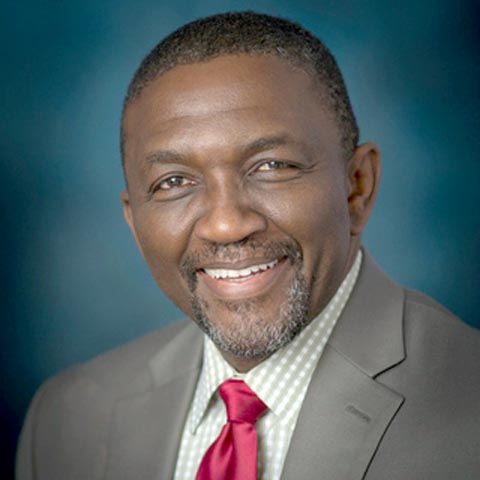
SCAG Approves the Appointment of Kome Ajise as its Executive Director
LOS ANGELES – The Regional Council of the Southern California Association of Governments (SCAG) today approved the appointment of Kome Ajise as the organization’s new Executive Director.
Ajise, who has served as Planning Director since November 2017, was selected to lead the nation’s largest metropolitan planning organization following an extensive search. He has 30 years of experience in regional planning and transportation, including serving as chief deputy director at the California Department of Transportation (Caltrans). Previously, he was Caltrans’ deputy director of planning and modal programs and was responsible for overseeing the Aeronautics, Mass Transportation, Rail, Transportation Planning, Local Assistance, and Research Innovation and System Information Divisions.
“Kome’s experience and his strong relationships at the local, state and federal level make him an ideal choice to lead SCAG into the future,” said SCAG President Alan D. Wapner. “This is a critical time for SCAG, as we work through our 2020 regional transportation plan, Connect SoCal, and provide our regional planning expertise to such important issues as reducing congestion, the housing crisis and attracting high-quality jobs to the region. Kome is a seasoned leader who understands the complex challenges we face in Southern California and throughout the state.”
“It is an honor to have been tasked with this position. I want to thank Darin as it would not have been possible without his leadership. We have a lot of work to do, but we have an extraordinary team that has demonstrated, time and time again, its ability to tackle the kinds of planning and transportation challenges that come with a region as large and complex as ours. I look forward to working even more closely with everyone at SCAG, the 191 cities and the six counties we serve, at all levels,” Ajise said.
He will assume his new role on an interim basis, effective immediately, pending the formal contract approval process.
-

Community Health Centers Press Congress for Long-Term Funding
SACRAMENTO, Calif. – Seven million Californians get medical treatment at Community Health Centers each year, and those centers say funding issues for this crucial part of the safety net are throwing the system into chaos.
Starting today, thousands of providers are gathering in Washington, D.C., to chart a path forward and fan out across Capitol Hill to meet with lawmakers.
James Luisi, chief executive of NEW Health in Boston and board chair for the National Association of Community Health Centers, said he wants Congress to approve the Community Health Investment, Modernization and Excellence (CHIME) Act, which would approve funding in five-year blocks.
“We want that funding extended, hopefully for at least another five years,” he said, “so that we can have some stable funding; and so that health centers will be able to access capital and meet their needs without worrying about going back and advocating for that funding to be extended again.”
Community health centers treat people even if they’re uninsured or can’t pay in full. But last fall, Congress let their funding run out and took several months to pass a temporary fix. Luisi noted that the health centers have bipartisan support, but in the past, a longer-term funding solution has been crowded out in Congress by other priorities.
Andie Martinez Patterson, director of government affairs for the California Primary Care Association, a nonprofit that represents community health centers in California, said their success must be a priority because they’re on the front lines in the fight against poverty, the opioid crisis and chronic diseases.
“They provide access to anyone regardless of immigration status, regardless of ability to pay,” she said. “They provide comprehensive services – so, besides just primary care, most of them have dental as well as behavioral health services.”
Across the country, community health centers serve 28 million patients per year, including more than 355,000 veterans and 8 million children, at more than 11,000 clinics.
-

Calif. Makes Progress Keeping Foster Kids Out of Group Homes
SACRAMENTO, Calif. – Foster kids do much better when placed with a family, compared with a group home, according to a new report that says California is making good progress on that score.
Researchers from the Annie E. Casey Foundation found that the Golden State went from 83% of foster kids in a family placement in 2007 to 87% a decade later.
Rob Geen, director of policy and advocacy reform at the Casey Foundation, said this shift, especially toward placement with family members, will pay off in a big way for society as kids get older.
“When children are placed with relatives, they’re more likely to finish school, they’re more likely to be employed or find employment later, they’re less likely to become early parents,” he said. “They’re more likely to succeed in families when they have families of their own. That is one trend which is really important; we’re using relatives more.”
California lawmakers in 2015 passed the Continuum of Care Act, which put a time limit on the use of group homes and standardized the licensing of foster parents, whether or not they are family members.
Assemblymember Mark Stone, D-Monterey Bay, who wrote the bill, said the state should give priority to the hardest-to-place cases.
“Older kids and kids who have longer-term trauma, more Adverse Childhood Experiences, they are sometimes difficult to place, because we don’t always have individualized placements for them,” he said. “And that is one of the things that is missing in California, is our ability to support the kids with the highest needs.”
Daniel Heimpel, publisher of the Chronicle of Social Change and an expert on foster care, said Congress should direct more federal dollars to helping foster families succeed.
“As we move out of group homes,” he said, “we have to be very careful to ensure that the relative, but also the non-relative foster parents, are being supported, so that they can make sure these kids have everything they need. “
Last year, Congress passed the Family First Prevention Services Act, which limits federal funds for group homes in a bid to encourage states to find more family placements.
The AECF report is online at aecf.org, the text of the Family First Prevention Services Act is at congress.gov, and Assembly Bill 243, the Continuum of Care Act, is at leginfo.legislature.ca.gov.