Category: News

  • New Appointments at College Strengthen Student Success

    New Appointments at College Strengthen Student Success

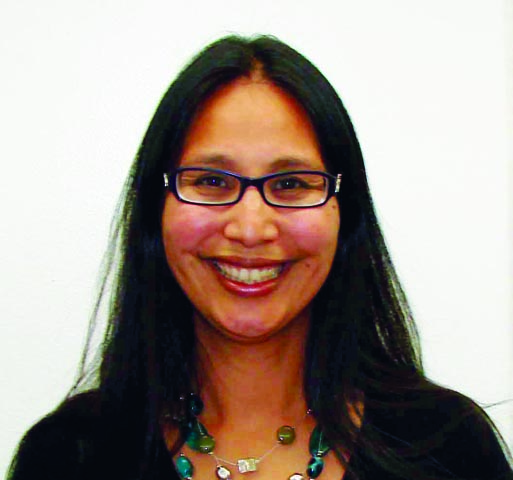
    PALM DESERT, CA — College of the Desert recently announced several staffing changes designed to enhance student success outcomes and strengthen the College’s executive leadership team. Appointments include the naming of Dr. Annebelle Nery as Vice President of Instruction, Jeff Baker as Interim Vice President of Student Services, John Ramont as Vice President of Administrative Services, and Dr. Scott Adkins as the Director of Education Centers, West Valley. 

    As Vice President of Instruction, Dr. Nery serves as the Chief Instructional Officer of the College, responsible for educational policy; academic programs and related services; for the accreditation processes. Advancement of student success and learning; instructional personnel decisions; budget development; enrollment management; fiscal accountability; program and curriculum development; educational centers (extended campuses); and the promotion and improvement of teaching and learning.

    For the past 20 years, Dr. Nery has been an integral part of the California university and community college systems. Last month, she was named as the state’s Distinguished CSSO of the Year, by the California Community Colleges Chief Student Services Officers Association for her work in developing the College’s innovative EDGE program. Her leadership in the K-14 Consortium; her efforts to provide mentoring services on campus and statewide; and advancement in the College’s Student Equity and Achievements gaps.

    She first joined the College as an adjunct professor in 2004. Since that time she has held various positions including being a full-time faculty member, Dean of Enrollment Services, Executive Dean of Institutional Effectiveness, and most recently Vice President of Student Success.

    “I thoroughly enjoy working with my colleagues at the College of the Desert, and I deeply respect the students and communities of the Coachella Valley,” said Dr. Nery. “

    Jeff Baker, who was previously the College’s Interim Vice President of Student Learning, will fill the Vice President of Student Services role on an interim basis, while the College recruits a permanent replacement. Baker has more than 20 years of community college leadership experience, previously holding positions at Ohlone College, Las Positas College, and Grossmont College.   

    John Ramont, the College’s Vice President of Administrative Services, has been with the College since 2014 serving as both the Director of Fiscal Services and as the Interim Vice President of Administrative Services. 

    As Vice President of Administrative Services, Ramont is responsible for overseeing fiscal services; operations and controls; budget development; purchasing; budgetary accountability; facilities services; maintenance and operations; information technology; construction and renovation projects; capital outlay and the bond program; and public safety services. As the Chief Financial Officer, he is also responsible for other business functions of the College’s operations, such as supporting organizations and contract services.

    Ramont’s prior experience includes supervisory and financial oversight roles for the Coachella Valley Unified School District, the County of San Diego Community Services Group and the Department of the Navy. 

    “My oldest daughter graduated from College of the Desert in 2017 and my son will graduate from the College later this spring. I started my educational journey at a community college, and I am a true believer in the system,” said Ramont. 

    The College also named Dr. Scott Adkins as the Director of Education Centers, West Valley. Responsible for supervising staff and coordinating programs for the Palm Springs and Desert Hot Springs campuses, Dr. Adkins has more than 35 years of educational experience, most of which has been spent in the Nashville area. He moved to the Coachella Valley in 2016 and has served as the College’s Interim Director of Education Centers and as an Educational Specialist and Interim Manager in the College’s Human Resources and Labor Relations Department.

    http://www.collegeofthedesert.edu/
  • SCAG Approves the Appointment of Kome Ajise as its Executive Director

    SCAG Approves the Appointment of Kome Ajise as its Executive Director

    LOS ANGELES – The Regional Council of the Southern California Association of Governments (SCAG) today approved the appointment of Kome Ajise as the organization’s new Executive Director.

    Ajise, who has served as Planning Director since November 2017, was selected to lead the nation’s largest metropolitan planning organization following an extensive search. He has 30 years of experience in regional planning and transportation, including serving as chief deputy director at the California Department of Transportation (Caltrans). Previously, he was Caltrans’ deputy director of planning and modal programs and was responsible for overseeing the Aeronautics, Mass Transportation, Rail, Transportation Planning, Local Assistance, and Research Innovation and System Information Divisions. 

    “Kome’s experience and his strong relationships at the local, state and federal level make him an ideal choice to lead SCAG into the future,” said SCAG President Alan D. Wapner. “This is a critical time for SCAG, as we work through our 2020 regional transportation plan, Connect SoCal, and provide our regional planning expertise to such important issues as reducing congestion, the housing crisis and attracting high-quality jobs to the region. Kome is a seasoned leader who understands the complex challenges we face in Southern California and throughout the state.”

    “It is an honor to have been tasked with this position. I want to thank Darin as it would not have been possible without his leadership. We have a lot of work to do, but we have an extraordinary team that has demonstrated, time and time again, its ability to tackle the kinds of planning and transportation challenges that come with a region as large and complex as ours. I look forward to working even more closely with everyone at SCAG, the 191 cities and the six counties we serve, at all levels,” Ajise said.

    He will assume his new role on an interim basis, effective immediately, pending the formal contract approval process.

  • Community Health Centers Press Congress for Long-Term Funding

    Community Health Centers Press Congress for Long-Term Funding

    SACRAMENTO, Calif. – Seven million Californians get medical treatment at Community Health Centers each year, and those centers say funding issues for this crucial part of the safety net are throwing the system into chaos.

    Starting today, thousands of providers are gathering in Washington, D.C., to chart a path forward and fan out across Capitol Hill to meet with lawmakers.

    James Luisi, chief executive of NEW Health in Boston and board chair for the National Association of Community Health Centers, said he wants Congress to approve the Community Health Investment, Modernization and Excellence (CHIME) Act, which would approve funding in five-year blocks.

    “We want that funding extended, hopefully for at least another five years,” he said, “so that we can have some stable funding; and so that health centers will be able to access capital and meet their needs without worrying about going back and advocating for that funding to be extended again.”

    Community health centers treat people even if they’re uninsured or can’t pay in full. But last fall, Congress let their funding run out and took several months to pass a temporary fix. Luisi noted that the health centers have bipartisan support, but in the past, a longer-term funding solution has been crowded out in Congress by other priorities.

    Andie Martinez Patterson, director of government affairs for the California Primary Care Association, a nonprofit that represents community health centers in California, said their success must be a priority because they’re on the front lines in the fight against poverty, the opioid crisis and chronic diseases.

    “They provide access to anyone regardless of immigration status, regardless of ability to pay,” she said. “They provide comprehensive services – so, besides just primary care, most of them have dental as well as behavioral health services.”

    Across the country, community health centers serve 28 million patients per year, including more than 355,000 veterans and 8 million children, at more than 11,000 clinics.

  • National Week of Conversation Aims to Break Down Political Barriers

    National Week of Conversation Aims to Break Down Political Barriers

    SANTA MONICA, Calif. – This is the second National Week of Conversation, and its organizers hope it becomes an annual event that fosters reconciliation and a stronger sense of common purpose among Americans. 

    Discussion events begin today throughout the country – some in person, and others online. They’re meant to get people talking – but more important, really listening – to views about major issues, like racial injustice and gun rights, where people too often talk past each other. 

    Jaclyn Inglis, partnerships director at the National Conversation Project, says the tendency for each side to ignore or even disdain the other has led to poor solutions and political standoffs in the past. 

    “And so, we think a way to really heal this is to encourage people to come together,” says Inglis, “to reconnect through conversations with people with diverse perspectives, where we come together to listen first to one another, to truly understand where each other is coming from.”

    On Saturday in Santa Monica, a group known as “Better Angels” is hosting what it calls a “Red/Blue Workshop on Bridging the Political Divide.” Another is set for the following Saturday, Apr. 13, in Rancho Palos Verdes. 

    There are also many virtual conversations set for the coming week. You can find out more online at nationalweekofconversation.org, listenfirstproject.org or better-angels.org.

    Inglis says society would be better off if more people would step outside their “one-sided echo chambers” amplified on cable news and social media, and reach out to people around them.

    “Just go out and start conversations with friends and family, and neighbors about some of these issues,” says Inglis. “We want people to join in these conversations already happening, but also, this is about really, even in their tight-knit community, to be able to engage in these conversations.”

    She says healthy debate often produces the best ideas for resolving problems, but people have to listen to each other. The “partisan gap” has more than doubled in the last 20 years – from 15 percentage points to 36 – according to The Pew Research Center.

  • Calif. Makes Progress Keeping Foster Kids Out of Group Homes

    Calif. Makes Progress Keeping Foster Kids Out of Group Homes

    SACRAMENTO, Calif. – Foster kids do much better when placed with a family, compared with a group home, according to a new report that says California is making good progress on that score.

    Researchers from the Annie E. Casey Foundation found that the Golden State went from 83% of foster kids in a family placement in 2007 to 87% a decade later.

    Rob Geen, director of policy and advocacy reform at the Casey Foundation, said this shift, especially toward placement with family members, will pay off in a big way for society as kids get older.

    “When children are placed with relatives, they’re more likely to finish school, they’re more likely to be employed or find employment later, they’re less likely to become early parents,” he said. “They’re more likely to succeed in families when they have families of their own. That is one trend which is really important; we’re using relatives more.”

    California lawmakers in 2015 passed the Continuum of Care Act, which put a time limit on the use of group homes and standardized the licensing of foster parents, whether or not they are family members. 

    Assemblymember Mark Stone, D-Monterey Bay, who wrote the bill, said the state should give priority to the hardest-to-place cases.

    “Older kids and kids who have longer-term trauma, more Adverse Childhood Experiences, they are sometimes difficult to place, because we don’t always have individualized placements for them,” he said. “And that is one of the things that is missing in California, is our ability to support the kids with the highest needs.”

    Daniel Heimpel, publisher of the Chronicle of Social Change and an expert on foster care, said Congress should direct more federal dollars to helping foster families succeed.

    “As we move out of group homes,” he said, “we have to be very careful to ensure that the relative, but also the non-relative foster parents, are being supported, so that they can make sure these kids have everything they need. “

    Last year, Congress passed the Family First Prevention Services Act, which limits federal funds for group homes in a bid to encourage states to find more family placements. 

    The AECF report is online at aecf.org, the text of the Family First Prevention Services Act is at congress.gov, and Assembly Bill 243, the Continuum of Care Act, is at leginfo.legislature.ca.gov.

  • PALM SPRINGS AERIAL TRAMWAY TO REOPEN

    PALM SPRINGS AERIAL TRAMWAY TO REOPEN

    Following a nearly two-month closure and almost $4 million in repair costs and lost revenue, the Palm Springs Aerial Tramway is poised to reopen Monday.

    The tramway has been closed since a Feb. 14 storm saturated the area and washed out some streets, including Tramway Road, the main route to the aerial attraction.

    The first car is scheduled to leave at 10 a.m., with the box office opening at 9:30 a.m. Online ticket sales will resume April 8, tramway officials said.

    “While the tramway was on track for record attendance in the fiscal year 2018-19, it is estimated that nearly 100,000 visitors were displaced due to the 46-day closure,” spokeswoman Cara Youngman said. “The tram also estimates that the incident resulted in almost $4 million in repair costs and lost ticket revenues.”

    In addition to the washed-out roadway, the rain caused damage to the attraction’s main power line, along with the Valley Station water tank and Mountain Station roof, Youngman said.

    Last month, the Mount San Jacinto Winter Park Authority approved $351,071 to fund identified repairs, while also setting aside up to $500,000 for other potential repairs, engineering, and inspections, at the discretion of the general manager. The authority also approved $300,000 to continue paying the tramway’s roughly 70 employees through April 1.

    “We truly look forward to welcoming back tram visitors beginning April 1st,” Tramway General Manager Nancy Nichols said. “Also, I wish to extend a sincere thank you to the entire Tramway staff for their efforts during our closure. And I’d like to offer a special thanks to our maintenance department for their tireless repair efforts and to our security department for their gracious greeting at our entry gate of disappointed patrons.”

    The tramway is billed as the world’s largest rotating tramcar and was opened in 1963. It carries visitors 2-and-a-half miles, a trip that takes about 10 minutes.

    More information can be found at pstramway@pstramway.com.

  • SCAG Approves the Appointment of Kome Ajise as its Executive Director

    SCAG Approves the Appointment of Kome Ajise as its Executive Director

    LOS ANGELES – The Regional Council of the Southern California Association of Governments (SCAG) today approved the appointment of Kome Ajise as the organization’s new Executive Director.

    Ajise, who has served as Planning Director since November 2017, was selected to lead the nation’s largest metropolitan planning organization following an extensive search. He has 30 years of experience in regional planning and transportation, including serving as chief deputy director at the California Department of Transportation (Caltrans). Previously, he was Caltrans’ deputy director of planning and modal programs and was responsible for overseeing the Aeronautics, Mass Transportation, Rail, Transportation Planning, Local Assistance, and Research Innovation and System Information Divisions. 

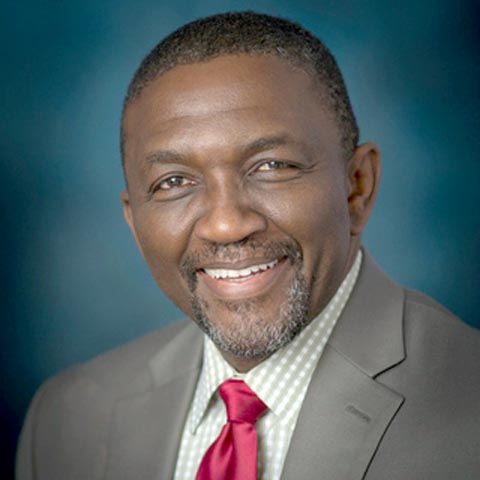
    Kome Ajise SCAG Executive Director

    “Kome’s experience and his strong relationships at the local, state and federal level make him an ideal choice to lead SCAG into the future,” said SCAG President Alan D. Wapner. “This is a critical time for SCAG, as we work through our 2020 regional transportation plan, Connect SoCal, and provide our regional planning expertise to such important issues as reducing congestion, the housing crisis and attracting high-quality jobs to the region. Kome is a seasoned leader who understands the complex challenges we face in Southern California and throughout the state.”

    “It is an honor to have been tasked with this position. I want to thank Darin as it would not have been possible without his leadership. We have a lot of work to do, but we have an extraordinary team that has demonstrated, time and time again, its ability to tackle the kinds of planning and transportation challenges that come with a region as large and complex as ours. I look forward to working even more closely with everyone at SCAG, the 191 cities and the six counties we serve, at all levels,” Ajise said.

    He will assume his new role on an interim basis, effective immediately, pending the formal contract approval process.

  • ‘Never seen anything like it’: Messi scores ‘Panenka’ free-kick as Barca beat Espanyol

    ‘Never seen anything like it’: Messi scores ‘Panenka’ free-kick as Barca beat Espanyol

    You’d imagine Lionel Messi is running out of new ground to break with his footballing genius, but the Barcelona star took things up another notch by scoring a ‘Panenka-style’ free-kick against Espanyol in La Liga on Saturday.

    Messi struck twice inside the last 20 minutes at the Nou Camp to seal the win for Barca in the Catalan derby and put them 13 points clear at the top of La Liga.

    Messi’s second was a well-taken finish on 89 minutes when he turned home a powerful Malcolm cross from 15 yards out, but it was the Argentine’s first goal that had the internet buzzing.

    Having struggled to break down a resilient Espanyol backline, Barca won a free-kick in Messi territory right on the edge of the box.

    The proximity of the ball to the goal, however, meant that it would take something special to get the ball up and over the wall and trouble Diego Lopez in the Espanyol goal.

    But ever the magician, Messi had something special up his sleeve as his dinked the ball softly over the wall in a ‘Panenka’ style generally associated with cheeky penalty kicks.

    The ploy took Espanyol unawares, as Lopez scrambled across his line and Victor Sanchez dashed back in vain, only the help the ball into the net with his head.

    Messi was credited with the goal, and his audacious strike had the more than 90,000 fans at the Nou Camp gushing, as well as the internet fawning yet again over a man who has seemingly taken Panenka penalties into a whole new genre.

    Messi reached yet more key milestones in the game on Saturday, moving up into second outright on the list of all-time Barcelona appearances, ahead of midfield legend Andres Iniesta and behind only Xavi.    

    Messi’s double also meant he had registered at least 40 goals in each season for the past decade, the testament to the 31-year-olds incredible longevity at the very top of the game.

    With the victory, Messi also tied legendary Real Madrid goalkeeper Iker Casillas for the most wins in La Liga on 334.  

    Saturday’s match had been billed as a meeting of Messi against Espanyol’s Chinese star Wu Lei, who joined the club in January and whose appearances are watched by tens of millions in his homeland.

    In the end, Wu was named on the bench and was only introduced as a second-half substitute, failing to make a significant impact as Messi yet again stole the show.